
Releasing ladybugs in your garden
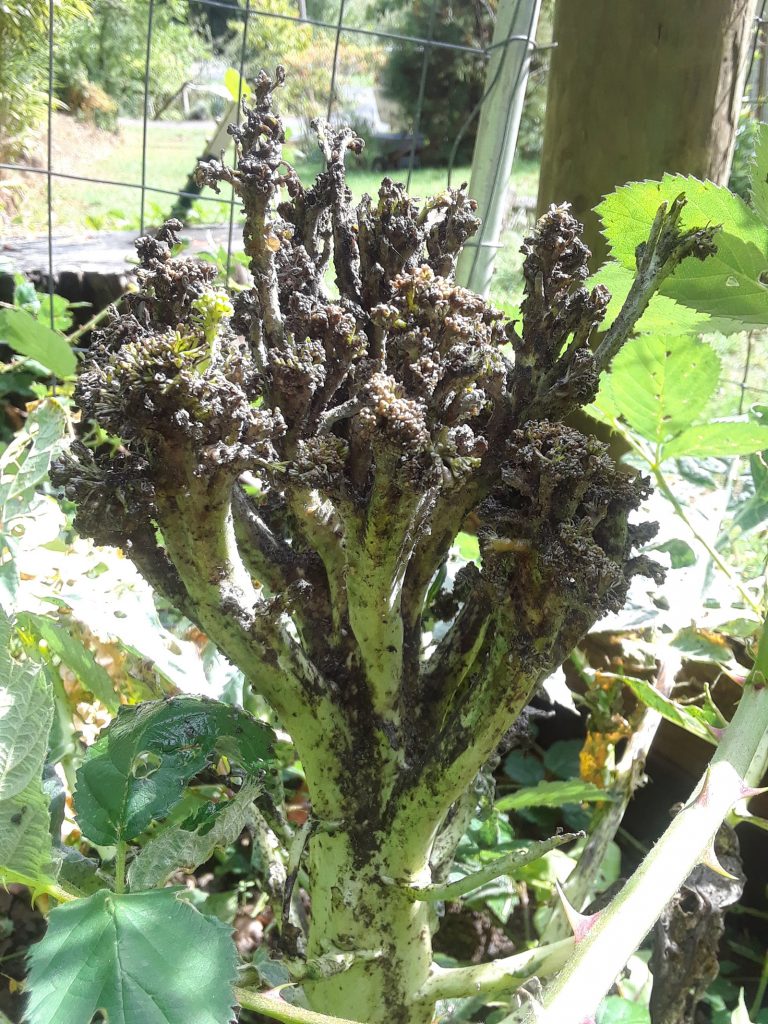
I believe every gardener has had a period of frustration with aphids. These small sap-sucking insects can ruin a head of broccoli or cauliflower in short order. Once they land on your plants they multiply quickly and create a lot of damage. Not only do aphids damage a plant by feeding on the sap, they can also introduce viruses and molds.
If your garden is prone to aphids you can use floating row covers. However, if your garden consists of several small beds tucked in around the property, or you live in a particularly windy area, row covers are not always convenient. There are a variety of home remedies on the internet that may or may not work against aphids — use your best judgment when sorting through them. Neem oil, insecticidal soaps, and horticultural oils are somewhat effective against aphids, and we have tried some of the more organic options. But we have another option that, although maybe not quite as effective, is still our favorite option.
Enter the ladybug!
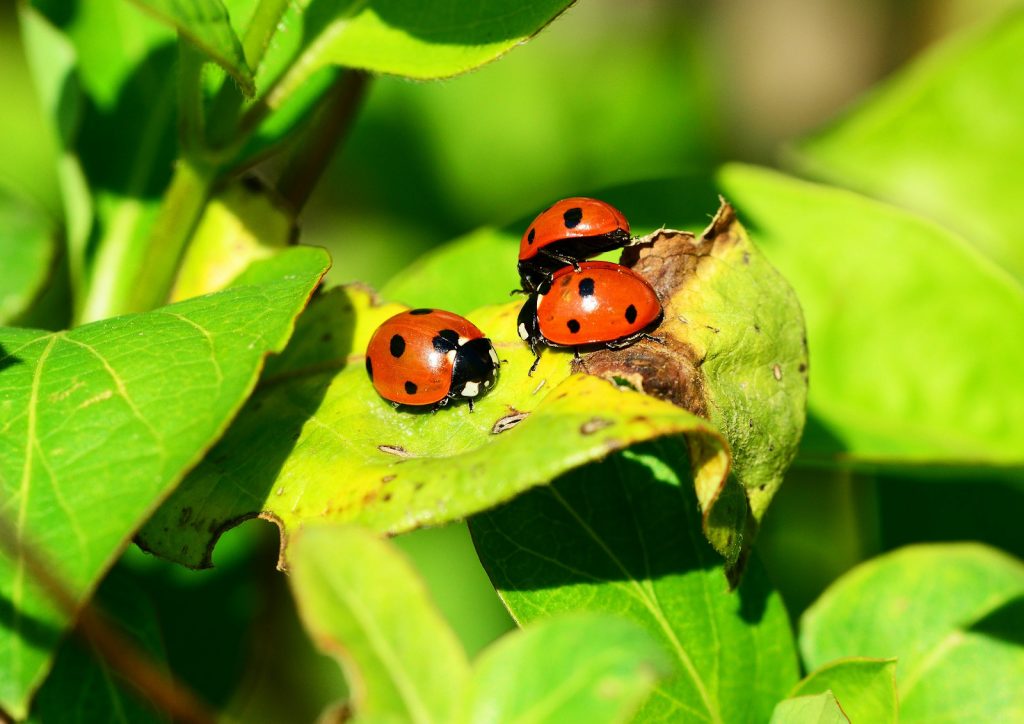
It is said that one ladybug can eat 50 or more aphids a day. Because it takes a good number of lady bugs to control a large aphid population it may not be worth it if you have just a few aphids. If there is not enough for the ladybugs to eat they will leave your yard in search of food elsewhere. They will most likely fly away anyway once they have eaten down the aphid population — don’t expect them to stick around for weeks on end. If you have a big aphid population and other food for the ladybugs to eat, they will be more likely to stick around and will actually lay their eggs in or near an aphid colony so that when the larvae hatch they will have plenty to eat.
The species of ladybugs that eat aphids, and the one you are most likely to find to purchase, is the convergent ladybeetle. Both adults and larvae of Hippodamia convergens feed mostly on aphids. They will also feed on whiteflies, other soft-bodied insects, and insect eggs.
Although ladybugs are not the best way to control aphids, the kids love them and they are a fun way to introduce the kids to more organic gardening methods and teach them about how all parts of a healthy ecosystem work together to achieve balance in the garden.
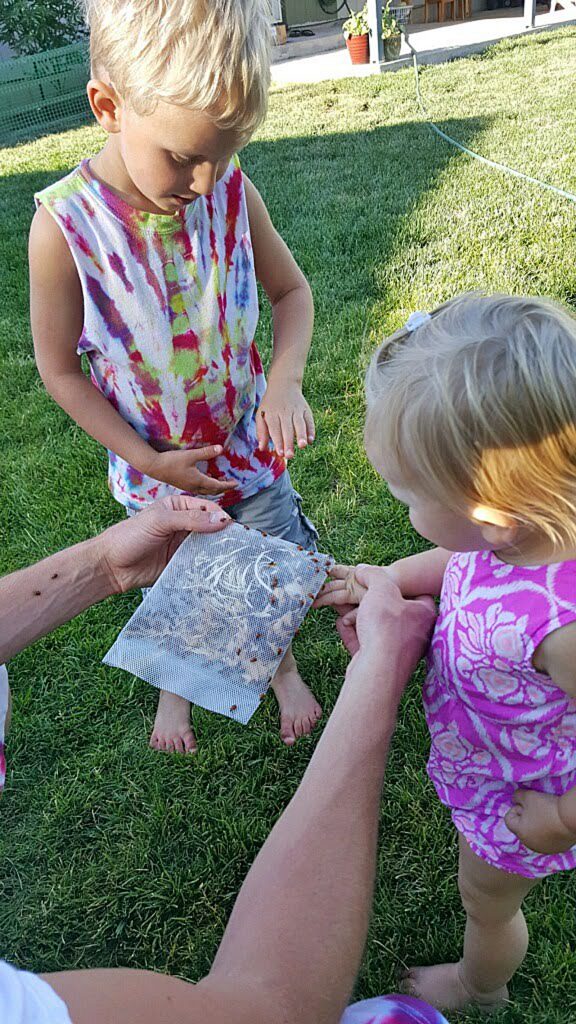
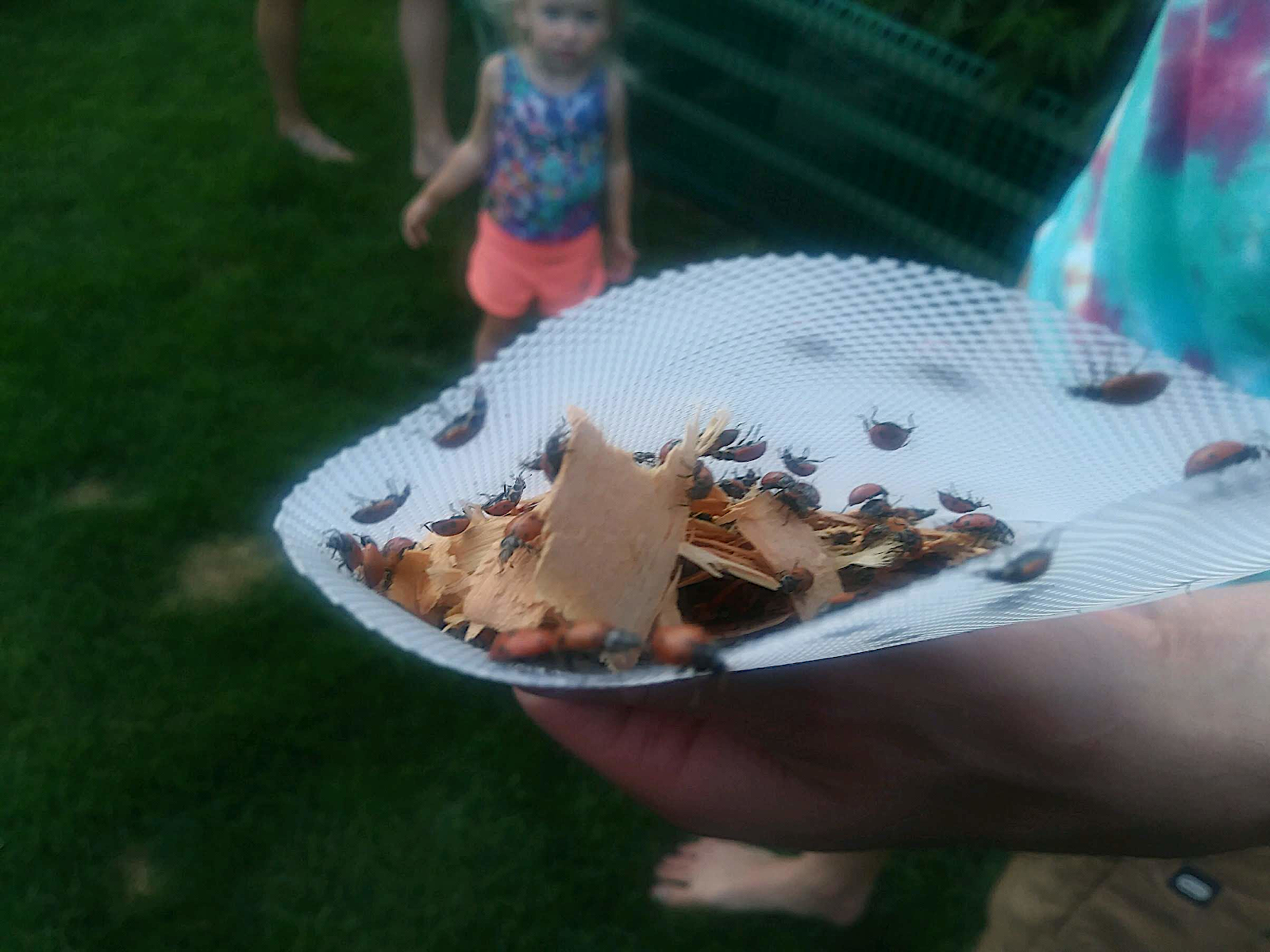
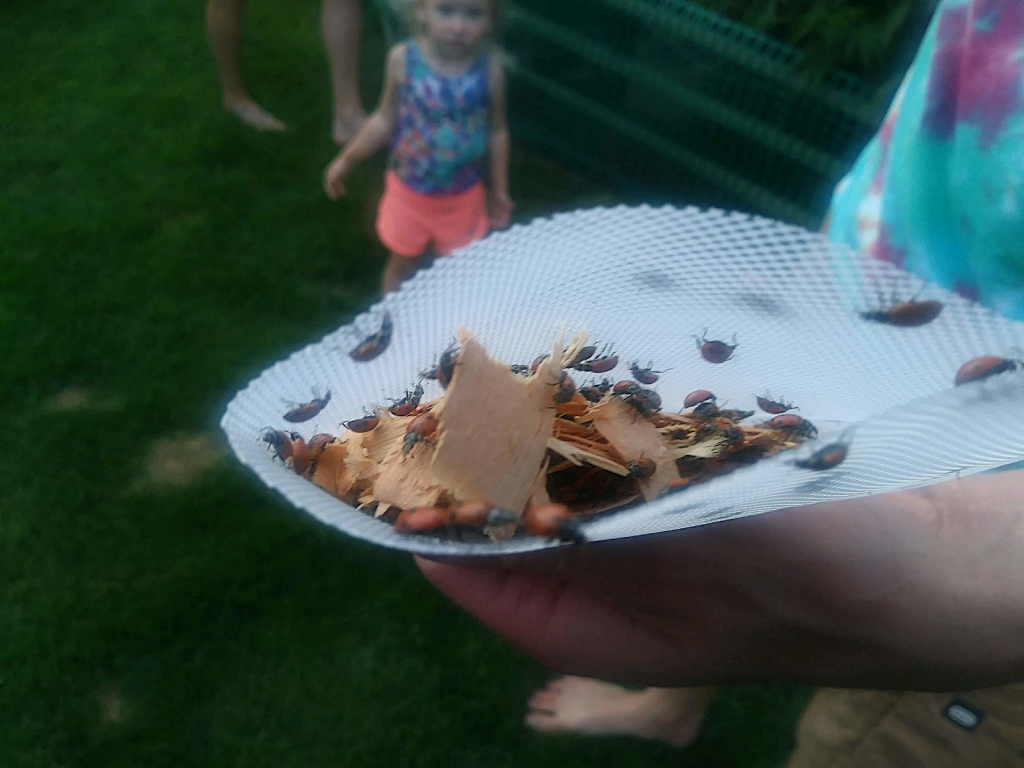
Eli and Haley recently released ladybugs in their garden that were purchased from Amazon. You can find ladybugs online and in garden centers. Follow the directions on the package to provide for the ladybugs until it is time to release them.
It is best to release the ladybugs in the cool of the evening. Give the plants a sprinkle of water about an hour before releasing the ladybugs. Place the bugs at the base of the plants; sprinkle them on big leaves, or in the crotch of branches. The goal is to try to get them to climb the plant rather than flying. Once they start flying they may fly right out of your garden. And if course, don’t release them on plants that have been sprayed with an insecticide.
Releasing ladybugs is a fun activity that we all enjoy, and it might just do some good in the garden.

Comments
Releasing ladybugs in your garden — No Comments
HTML tags allowed in your comment: <a href="" title=""> <abbr title=""> <acronym title=""> <b> <blockquote cite=""> <cite> <code> <del datetime=""> <em> <i> <q cite=""> <s> <strike> <strong>