
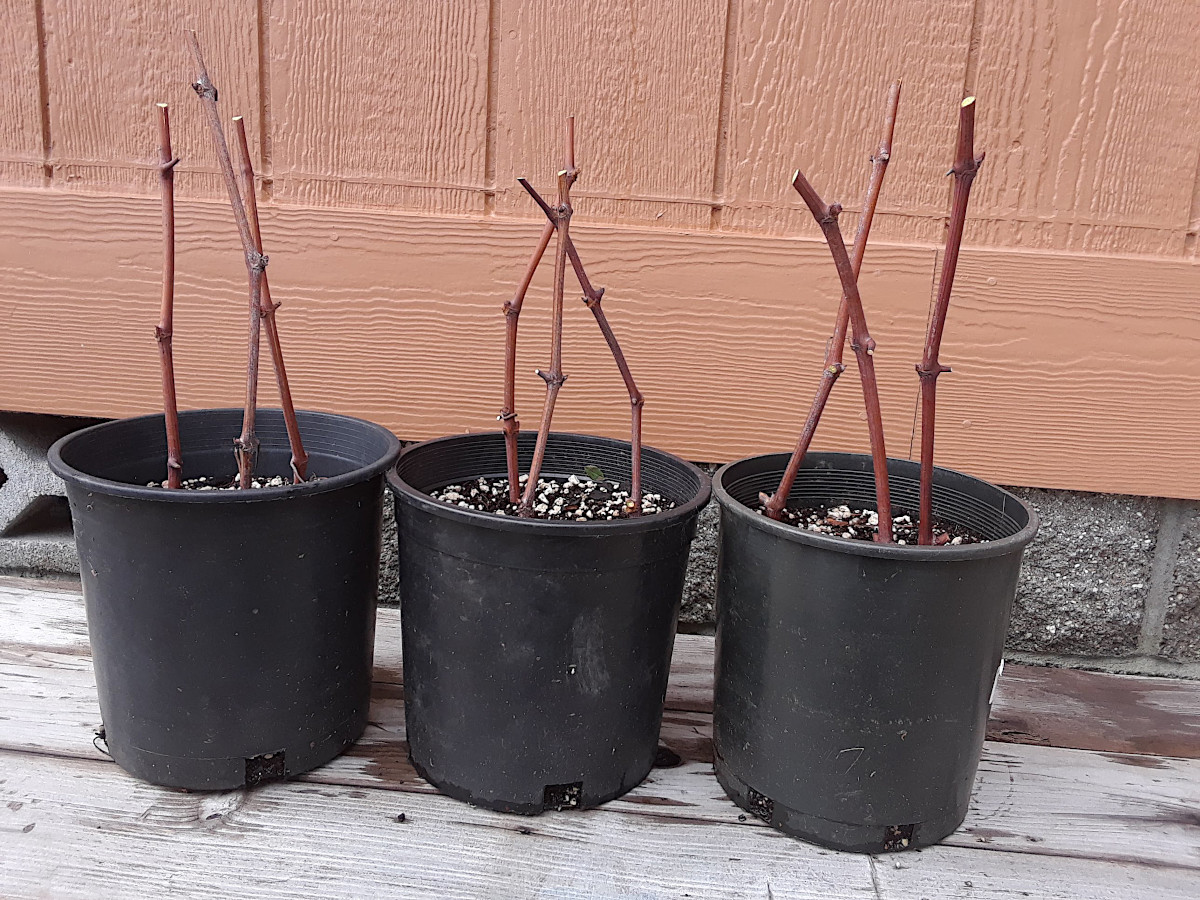
Propagating grapes
We have three different varieties of grapes: Red Flame Seedless, Canadice, and a white grape (we don’t know the variety) that was given to us, but doesn’t produce very well.
In our garden, if it’s not productive — out it goes. So the white grape is going to go, and I want to make the arbor useful rather than taking it down. This means propagating one of the other grapes to take the place of the white grape. The Red Flames are nice, but the Canadice grapes are our favorite. I wouldn’t mind having more to use all year long. With these grapes I make raisins, home-canned grape juice, grape jelly, and we also freeze them for use all winter long. They are great added to yogurt and granola for a quick lunch, or added to smoothies for a sweet treat.
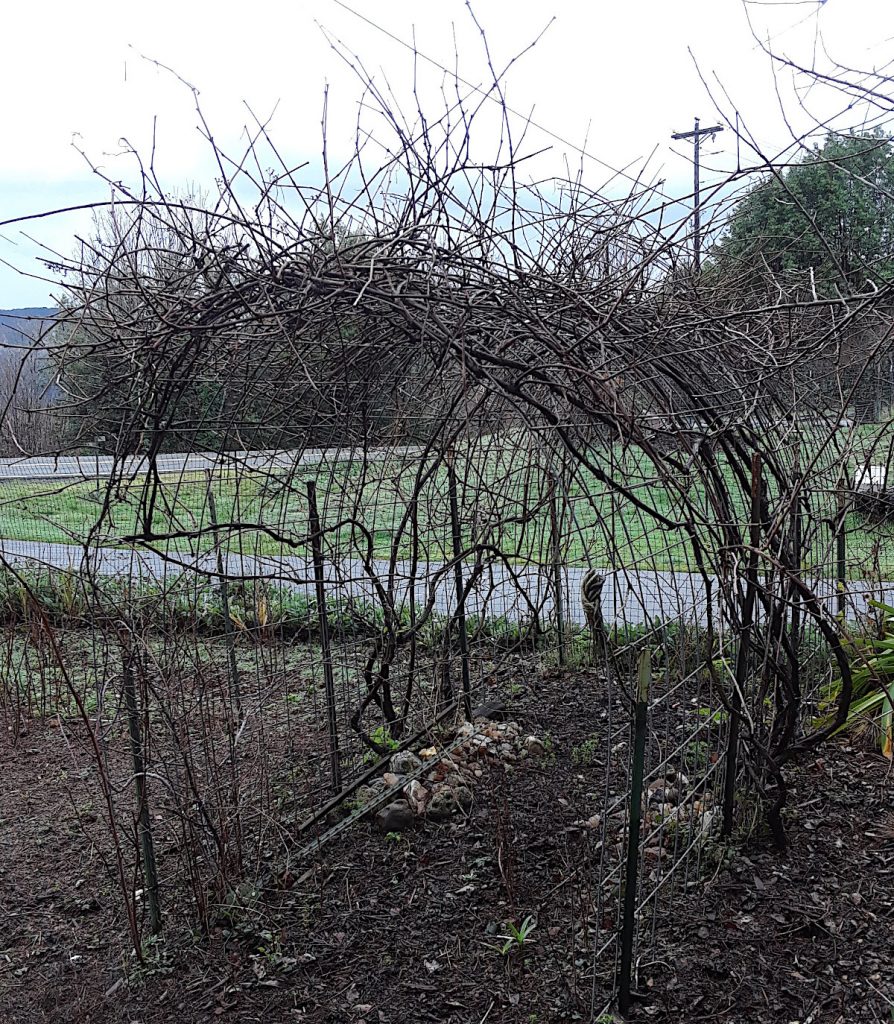
It is the middle of winter when I write this, and happens to be the perfect time to propagate grapes. Winter is also the best time to prune grapes so I can kill two birds with one stone. The most common method to propagate grapes is by using cuttings and I’ll have plenty of cuttings after pruning the Canadice vines.
Directions for propagating grapes
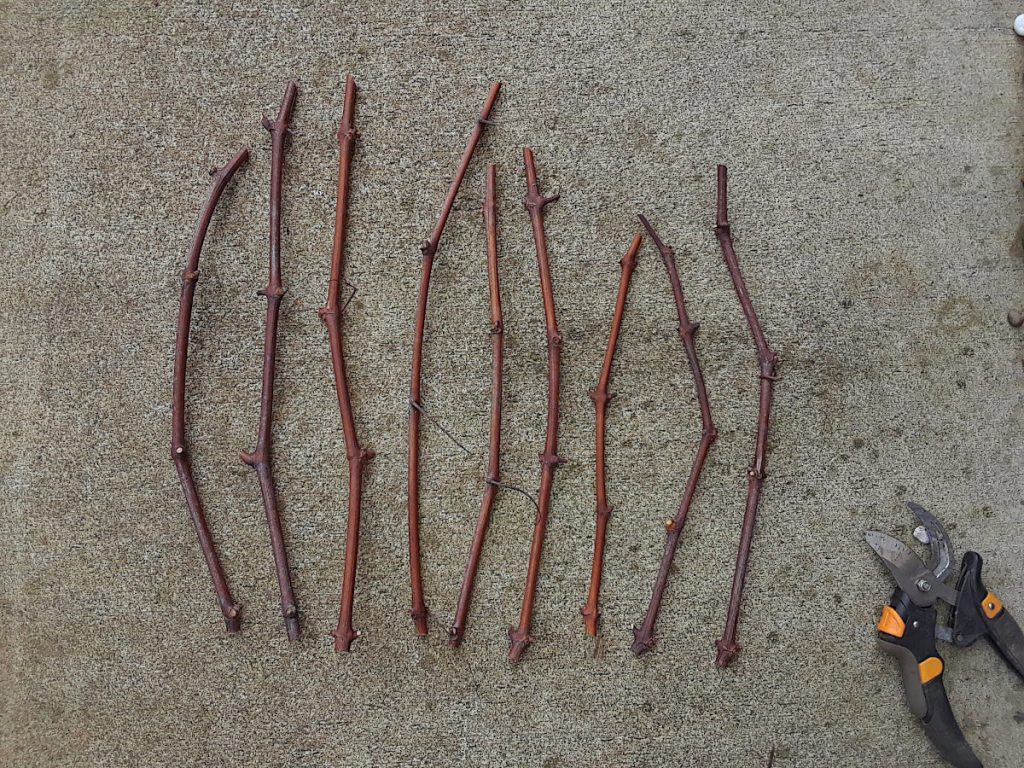
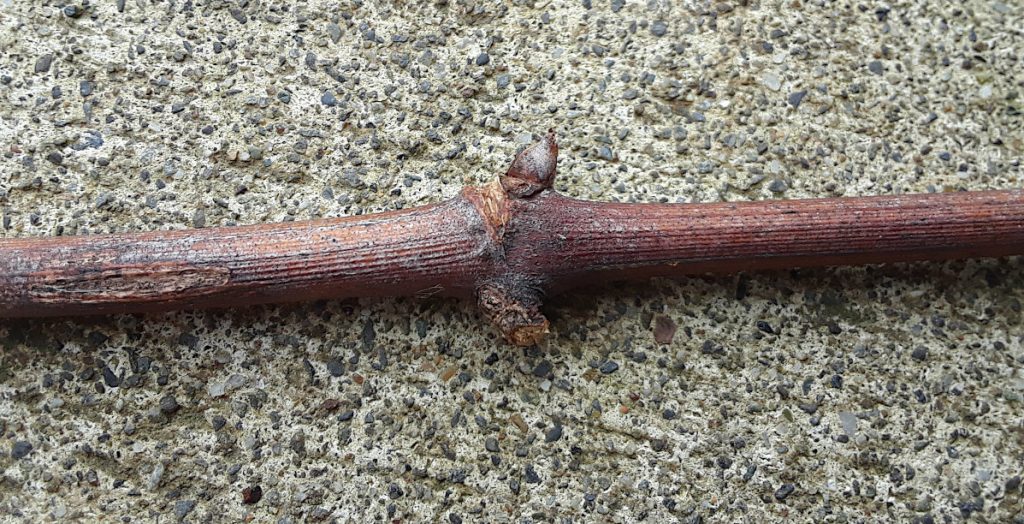
In order to have the most success with propagation it is best to select one-year-old vines that are a little larger in diameter than a pencil. Make cuttings 12-18 inches in length that have 3-4 buds per cutting. Be sure to remember which side is up! An easy way to remember is to immediately place the cuttings in a bucket or other container with the bottom down. You’ll want the bottom of each cutting to have a node (bud); this is where the roots will develop. Cut right below the node being careful not to cut it or damage it in any way or it may not produce roots. Don’t leave more than half inch of stem below the node. It’s OK to leave a couple of inches above the top node when trimming the top of the cutting. Be careful when handling the cuttings so you don’t damage any of the other nodes (the nodes are where the leaves will bud out come spring).
Once you have the amount of cuttings you like, prepare some pots with moist potting soil. It’s a good idea to take a few extra cuttings just in case every cutting is not successful. Dip the cuttings in rooting hormone powder and poke them into the soil 2-3 inches. Place the pots of cuttings in a protected place that will still get winter sun. Don’t worry about them being cold; at this point they are dormant and will remain so until the weather starts to warm up. Keep the soil moist, if necessary, and you should see sprouts when the weather starts warming in spring. Let the cuttings established a bit and develop some roots before transplanting them in early to mid-summer. If you live in a mild climate and don’t mind watering them daily during the summer you can even wait until the cool weather of fall to plant them.
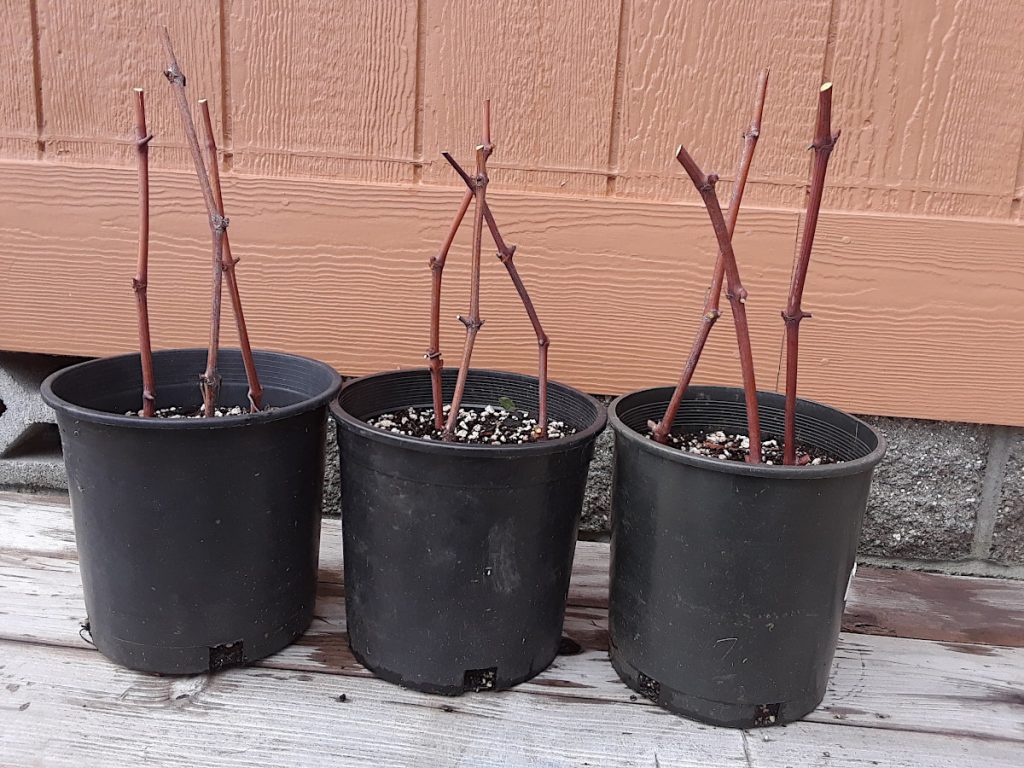
You can also place the cuttings directly in the soil where you want to plant them. Just dig a little hole, dip the cuttings in rooting hormone and bury them 3-4 inches deep. Firm the soil down around the cutting and water to wet the soil and help remove any air pockets.

Comments
Propagating grapes — No Comments
HTML tags allowed in your comment: <a href="" title=""> <abbr title=""> <acronym title=""> <b> <blockquote cite=""> <cite> <code> <del datetime=""> <em> <i> <q cite=""> <s> <strike> <strong>