
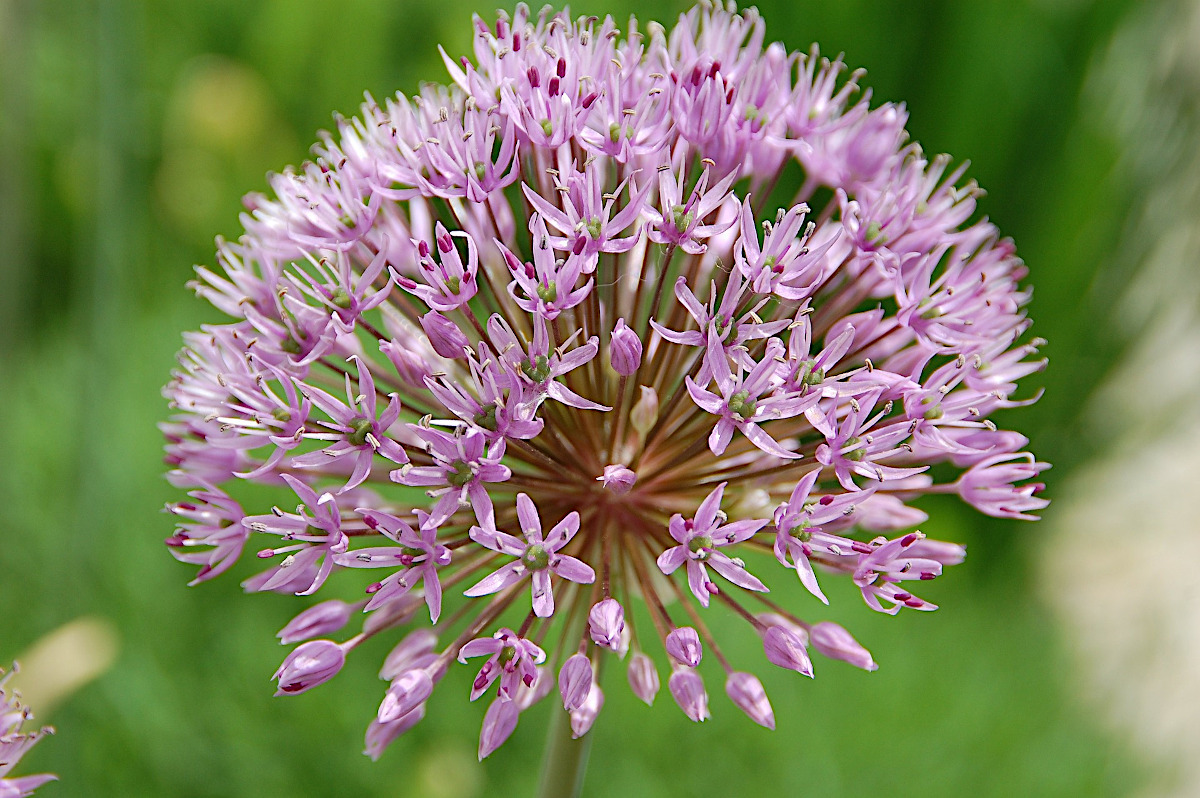
Planting garlic
Who doesn’t love garlic? We do and luckily, it is a super easy crop to grow. In most areas — and where we live — the best time to plant garlic is in the fall.
Garlic is one of the few crops that deer don’t eat (we are forever fighting the deer for our food), and because of that we are able to grow it outside of our fenced garden areas. It should be kept in mind however, that where ever you plant garlic, that space will be tied up from fall until late the next summer when the garlic is harvested.
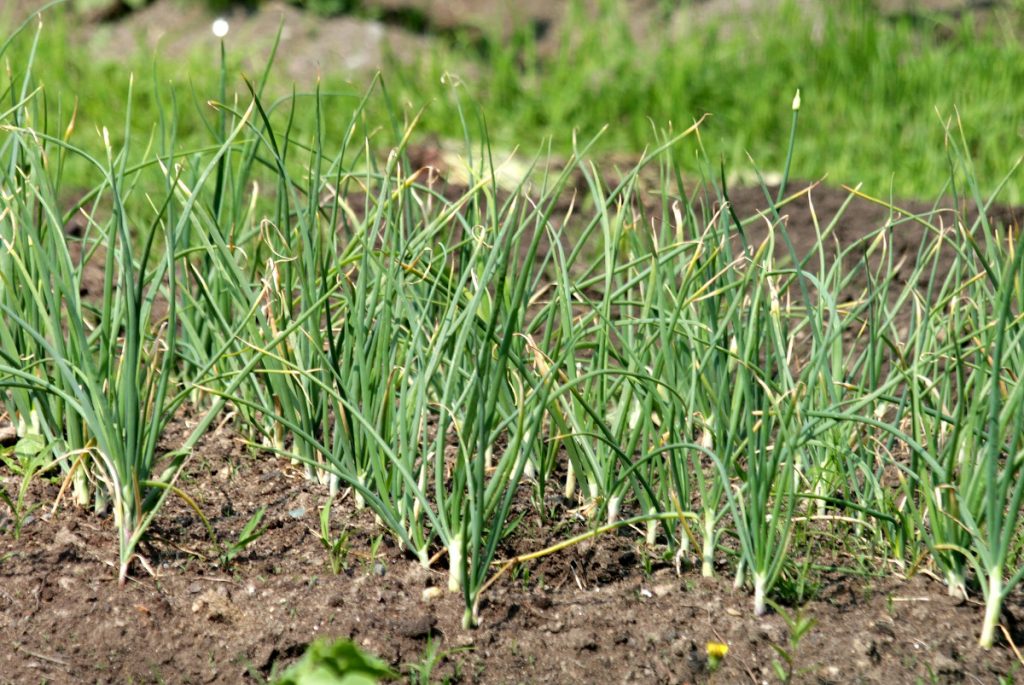
There are three different types of garlic:
Hardneck: Hardier than softneck varieties, hardneck garlic is a good choice for areas with very cold winters. Hardneck garlic produces a stiff stem that grows up through the center of the bulb. Hardneck varieties do not store as long as the softneck varieties and should be used within 4-6 months. Hardneck varieties of garlic generally have a spicier, more robust flavor than softneck varieties. It also has larger, easier to peal cloves than the softneck varieties.
Softneck: This is the type of garlic you’ll find at most grocery stores and is the type you’ll want to grow if you want to make garlic braids. Milder in flavor than hardneck varieties, this garlic has its own uses and will keep for a very long time — sometimes (if conditions are right) until the next year’s harvest.
Plant garlic about four weeks before the first frost is expected; this gives the bulbs time to put out some healthy roots before the cold weather really hits. To plant hardneck or softneck garlic, bury each clove (pointed end up) 3-4 inches deep and 4-6 inches apart in soil that has had some compost worked in. Plant the garlic bulbs in a spot that gets 6-8 hours of sunlight per day. Once planted, cover the garlic bed with a good amount of mulch to help conserve moisture and keep the weeds from growing. You might see a few shoots of green coming up later in the fall, that is ok. The garlic will start growing for earnest come spring. If you planted some hardneck varieties you will be able to harvest scapes in spring. Scapes are the flower buds of garlic. It’s a good idea to cut them off so the plant will direct more energy into producing large bulbs. Don’t toss the scapes though, they are delicious sauteed with butter, added to stir fries, or made into a garlicky pesto. They can even be pickled!
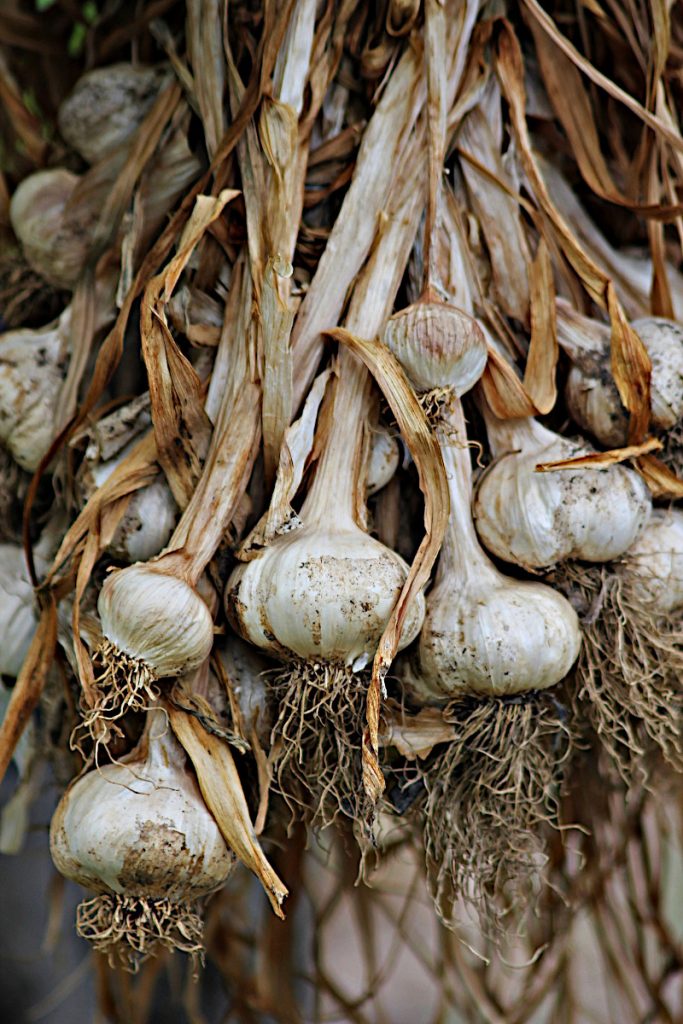
Harvest the garlic when the tops begin to brown and fall over, but before they completely dry out. To harvest, dig up the bulbs, being careful not to get too close with the shovel. (You don’t want to chance damaging the bulbs or they will rot in storage.) Lift the garlic heads and carefully brush off the soil. Let them cure in a shady spot for a couple of weeks. You can tie 4-6 together with a string and hang them to cure. Once cured, you can cut off the roots and any remaining leaves. Store bulbs in a cool, dry, dark place.
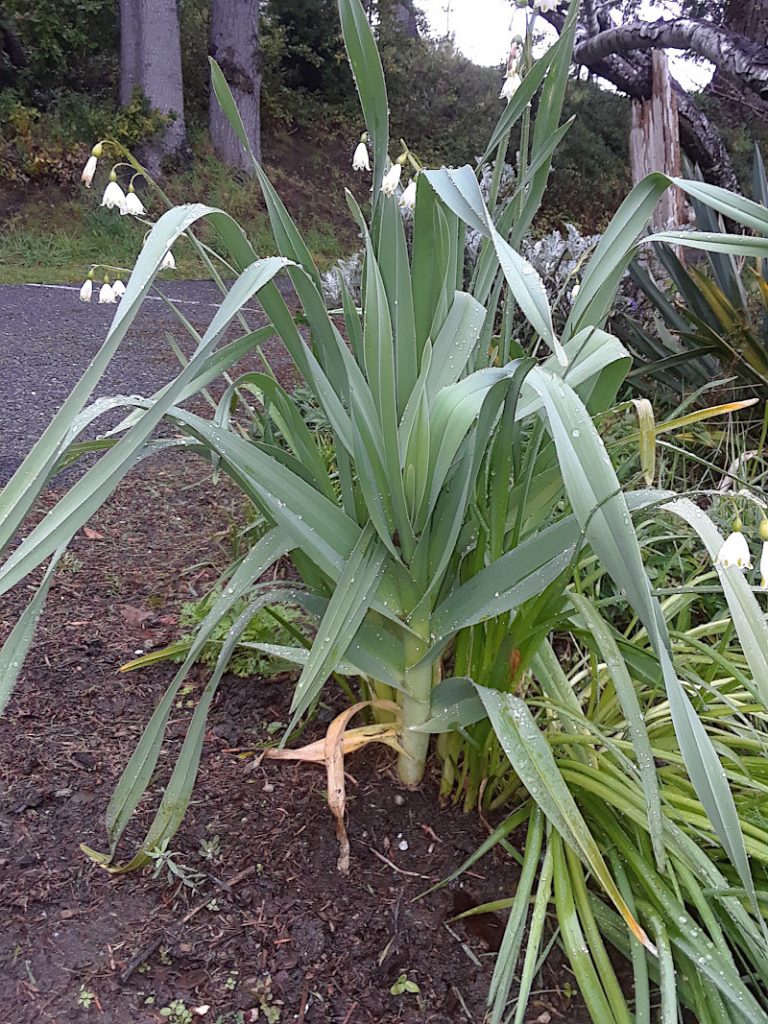
Elephant garlic: Although not a true garlic, it belongs to the same genus, Allium. Elephant garlic looks like a huge head of garlic, but is milder in flavor and has a crunchier texture. Although elephant garlic is in the same family as garlic they are more closely related to leeks. I like to use the giant cloves sliced in stir fries, grated into creamy potato soup, or sliced super thin as a topping for salad.
To plant elephant garlic, bury each clove 4-6 inches deep and space them 6-8 inches apart. When it’s not raining, water about an inch per week. In the spring elephant garlic will send up flower stalks (scapes) that get about three feet tall. My Elephant garlic is planted among the flowers; they look quite nice when they bloom. (Although if you want larger cloves of garlic, cut off the scapes.) Like regular garlic, the elephant garlic is not bothered by the deer.
Harvest when the leaves die down and turn brown. Leave the bulbs in a shady spot for a few weeks to cure before storing. Keep in mind that elephant garlic does not keep as long as regular garlic. Since it doesn’t freeze hard where we live I leave my elephant garlic in the ground and just go out and dig some up when I need it. The large bulbs multiply and will spread into a clump if left in the ground. When harvesting I just make sure to leave enough bulbs or corms in each spot to keep that particular spot producing. The corms, which grow on the outside of the bulb, are much smaller and will kind of fall off the bulb when you’re harvesting the garlic. If you plant these corms, they will produce a non-blooming plant in the first year with a single large clove. In the second year, the clove will separate into multiple cloves and look like a regular head of garlic albeit much larger.
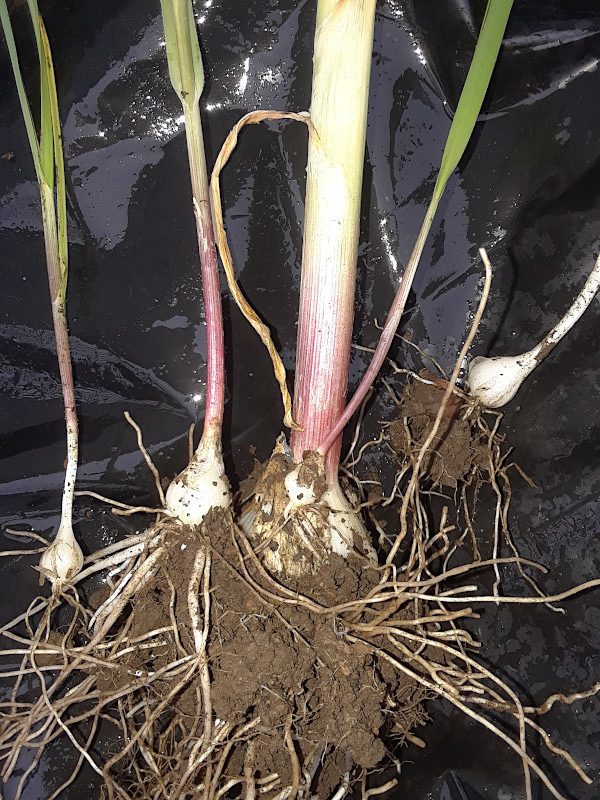
Plant a few varieties of garlic and you will be pleasantly surprised by the difference in flavor from the garlic you find at the grocery store. Just like everything else, garlic tastes better if you grow it yourself.

Comments
Planting garlic — No Comments
HTML tags allowed in your comment: <a href="" title=""> <abbr title=""> <acronym title=""> <b> <blockquote cite=""> <cite> <code> <del datetime=""> <em> <i> <q cite=""> <s> <strike> <strong>