
Making venison pepper sticks
Ian was able to harvest a deer this year during hunting season. Part of the meat was reserved for making pepper sticks, which we all love.
Hunting season is also the end of harvest season for the garden so it’s a really busy time of year for us. When Ian was butchering the deer he set aside and froze the portions of meat that would be ground and used to make the pepper sticks. It would be easier to do this project when he could take the time to do it right rather than rushing through it.
When Ian was ready to make the pepper sticks the meat was thawed and ground with beef fat. Ian used a 10% fat mixture to grind the meat. 10% fat content keeps it a little on the lean side and doesn’t make the pepper sticks too greasy. Ian uses a Cabela’s Carnivore Commercial-Grade 1.5hp meat grinder. These are a little on the pricey side, so this grinder was purchased by three families and we all share it. I cannot express enough that this machine was definitely worth it’s price. If you process a lot of meat whether it’s wild game or domestically raised, you should think about getting one of these (and no, we are not affiliated with this company in any way – we are just very impressed with this machine).
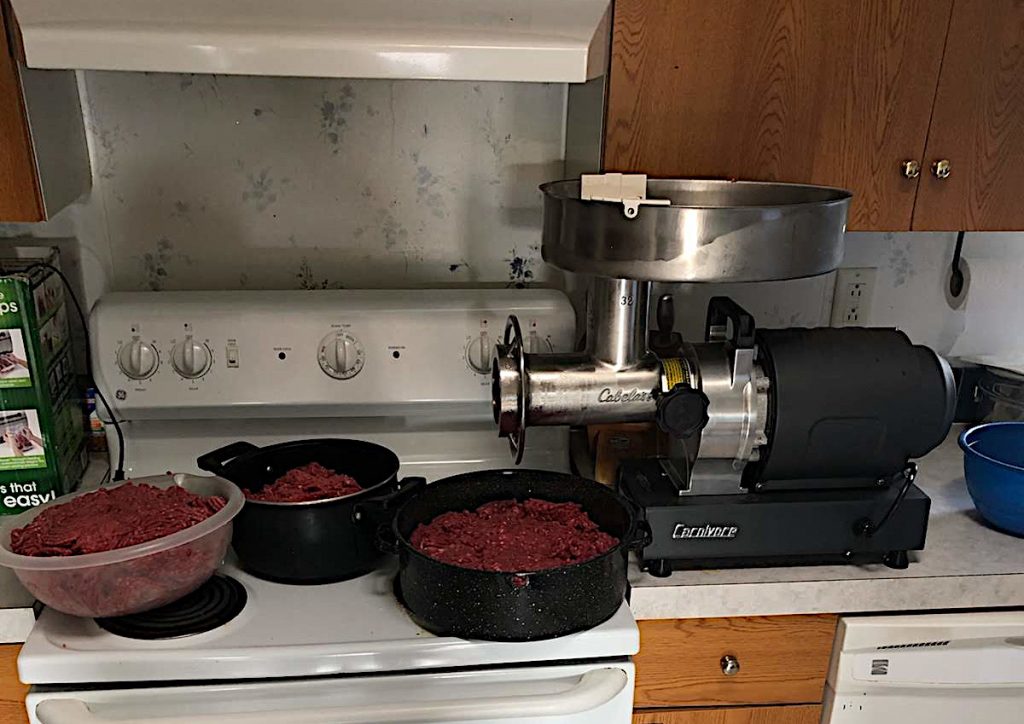
Once the meat was ground, seasonings and cure (from Hi Mountain Seasonings) were added and everything was mixed together well. The mix was a little dry so Ian also added a cup and half of water to keep it moist.
The ground and seasoned meat was left to sit overnight in the refrigerator to absorb seasonings. In the morning Ian ran the meat through the grinder again with the sausage attachment to fill casings. (21mm casing from LEM Products – www.lemproducts.com)
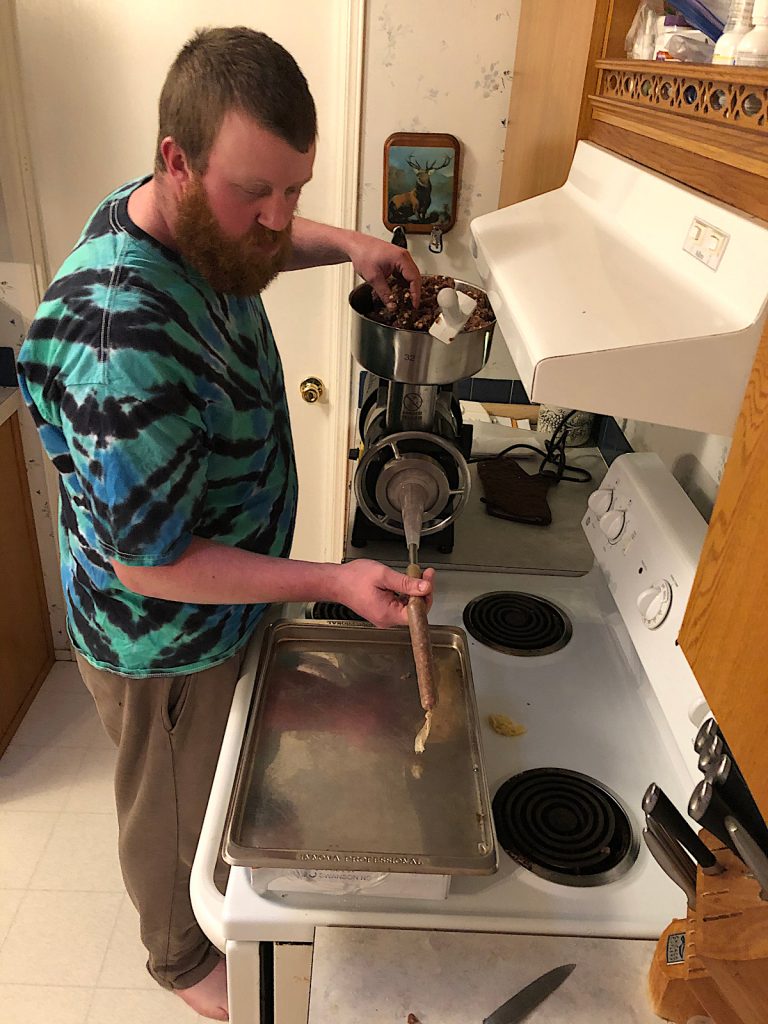
For a little spicier flavor Ian added high-temperature pepper jack cheese to half of the ground venison. High temperature cheese can be purchased at www.sausagemaker.com among other places. High temperature cheese allows you to put cheese in your meat products and the cheese will maintain its shape, not melting like ordinary cheese when cooking. However, with the stuffing attachment on the grinder, it ground the cheese in with the meat instead of leaving little chunks of cheese in the pepper stick. The meat and cheese pepper sticks turned out fine with really good flavor – just no little chunks of cheese. If he had used a sausage stuffing machine rather than the grinder, the cheese wouldn’t have gotten smooshed in. However, that’s a purchase for another day. It would be nice to have a sausage stuffer, but it’s not really necessary to turn out a good product.
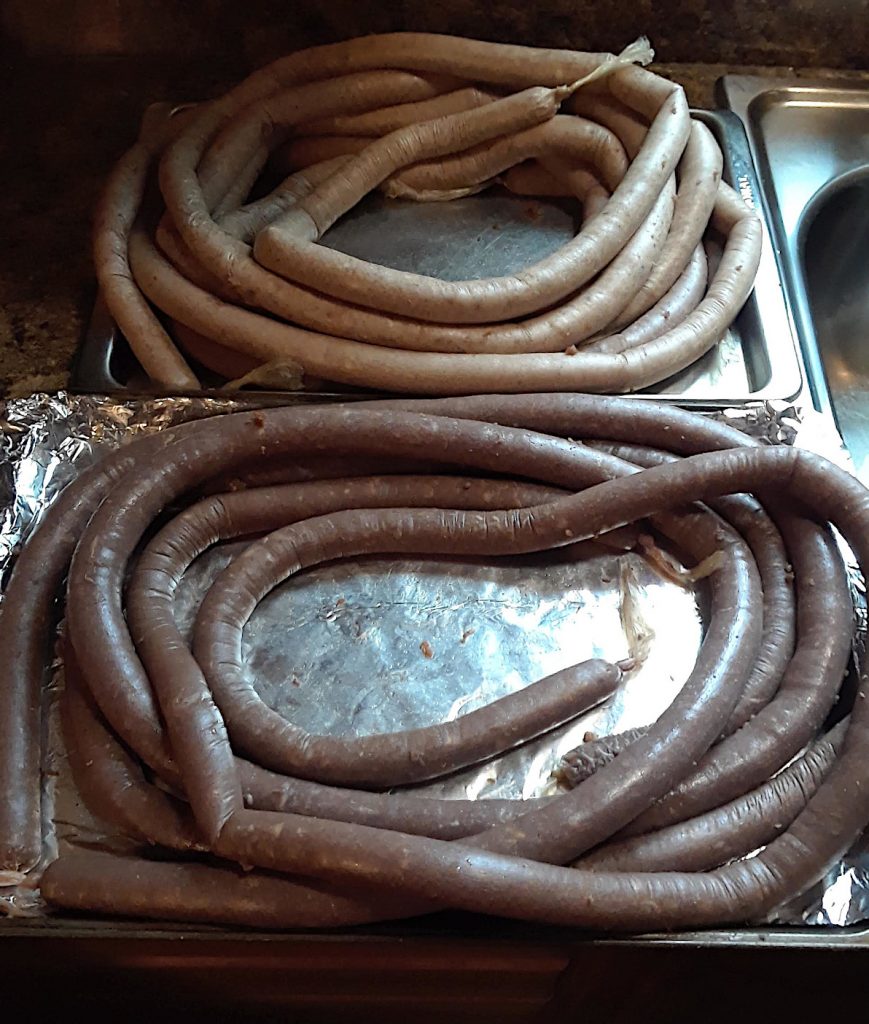
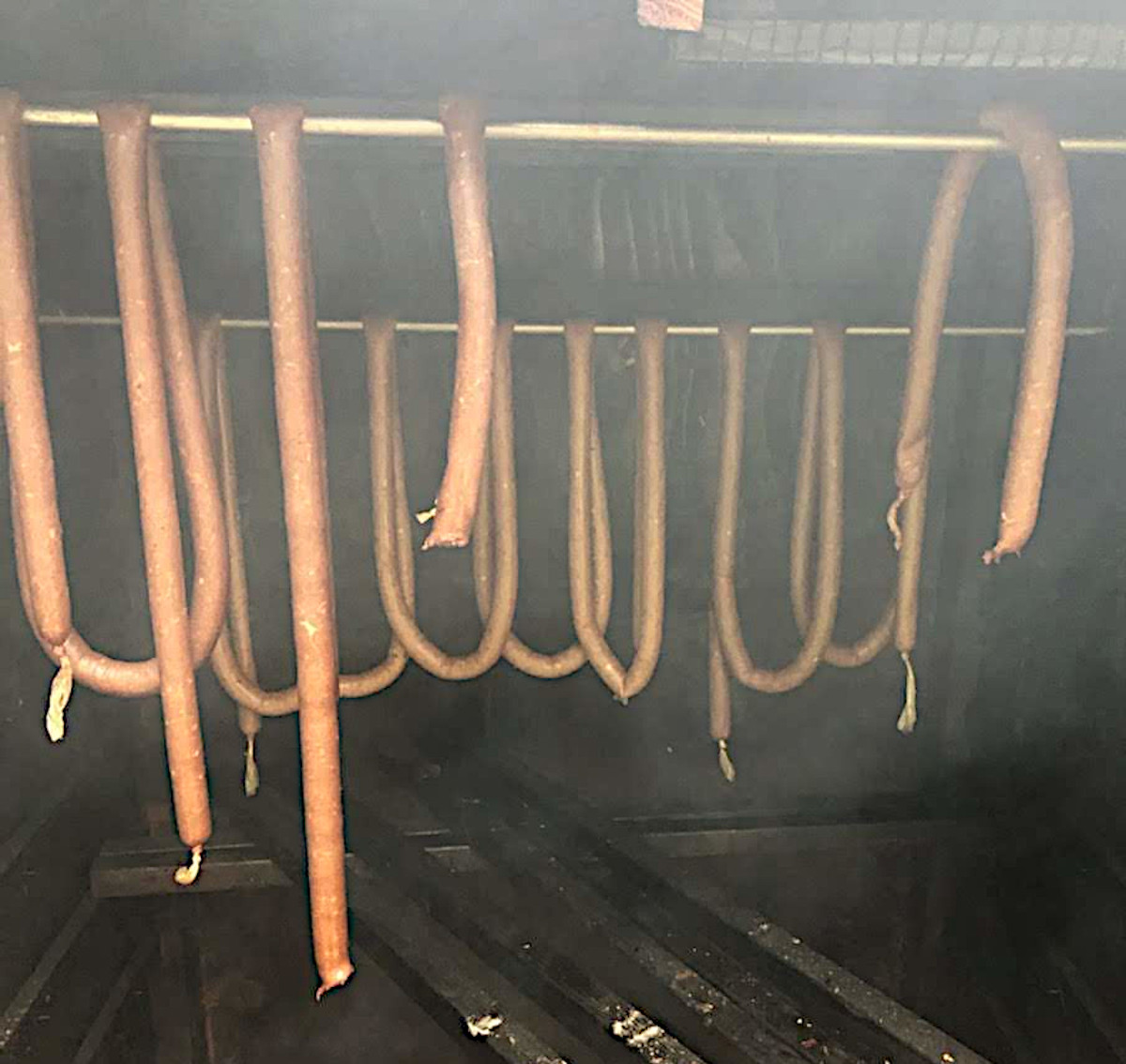
After the meat was stuffed in the casings, it was ready to smoke. If you decide to make pepper sticks and smoke them, follow the directions for your particular smoker. We use a smoker that was built by my nephew and can hold quite a bit of meat or fish. Ian is usually the one that tends the smoker and has worked out the best procedure for this particular smoker. He used madrone as the smoking wood for these pepper sticks, but has used a variety of wood for smoking different meats. Cherry, apple, plum, and madrone all make good smoking wood. Alder is especially good for smoking fish. Some woods, like mesquite and hickory, are good if you are smoking your meat for a short period of time, but will become bitter-tasting with a longer smoke period.
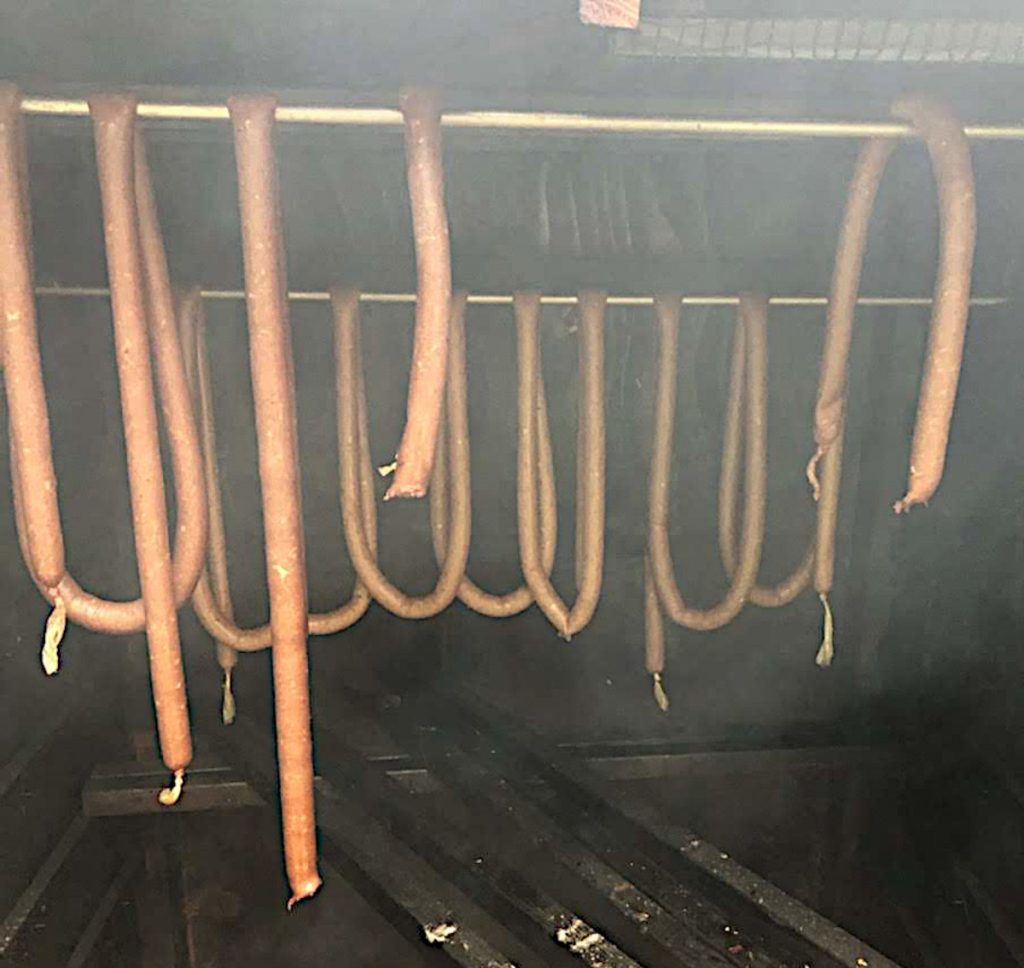
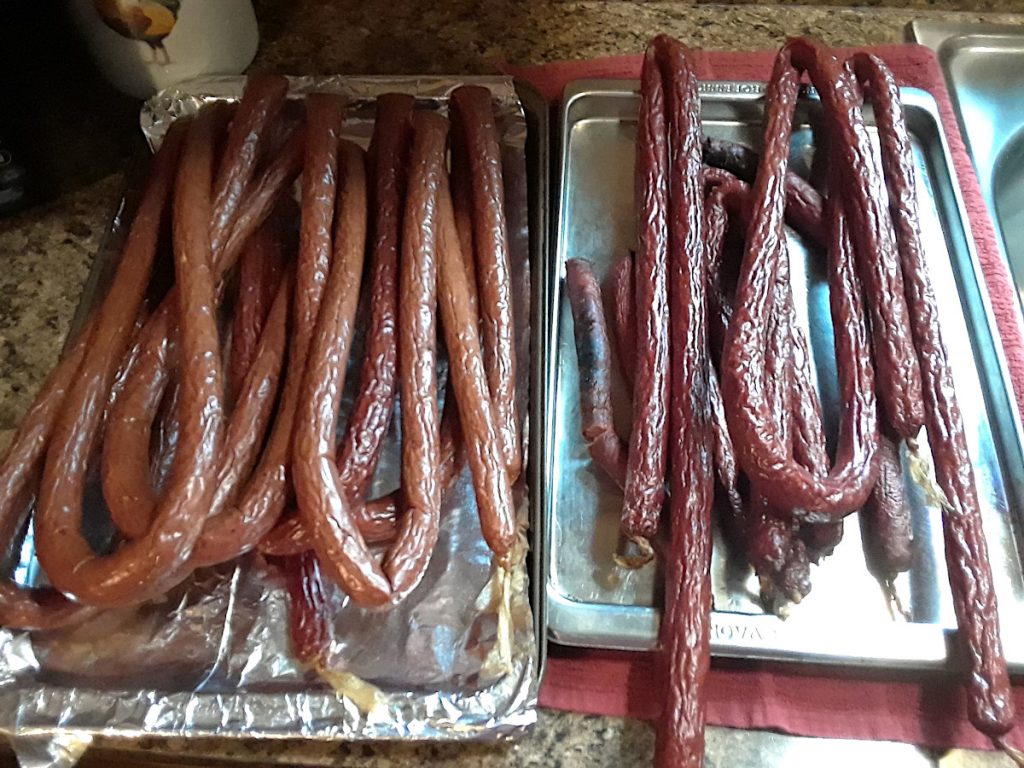
Ian smoked the pepper sticks at a temperature of 170-200° F until the internal temperature reached 160° F. They turned out delicious — much better than store-bought pepper sticks! Some of the pepper sticks were reserved to eat in a short amount of time and the rest were vacuum sealed and placed in the freezer. Pepper sticks can be stored in the freezer for a year before losing quality. I doubt if we will have to worry about storage time for these pepper sticks — they’re gonna go fast!

Comments
Making venison pepper sticks — No Comments
HTML tags allowed in your comment: <a href="" title=""> <abbr title=""> <acronym title=""> <b> <blockquote cite=""> <cite> <code> <del datetime=""> <em> <i> <q cite=""> <s> <strike> <strong>