
Harvesting Chanterelles
The cool, wet climate of the The Pacific Northwest produces temperate rainforests which are perfect for growing mushrooms. One of our favorite mushrooms to harvest in the wild is chanterelles. They have a nice mild peppery-type flavor that compliments a lot of other foods. Chanterelles are delicious sauteed in butter, as an addition to eggs, added into a wild rice casserole, or in a sauce for topping meats.
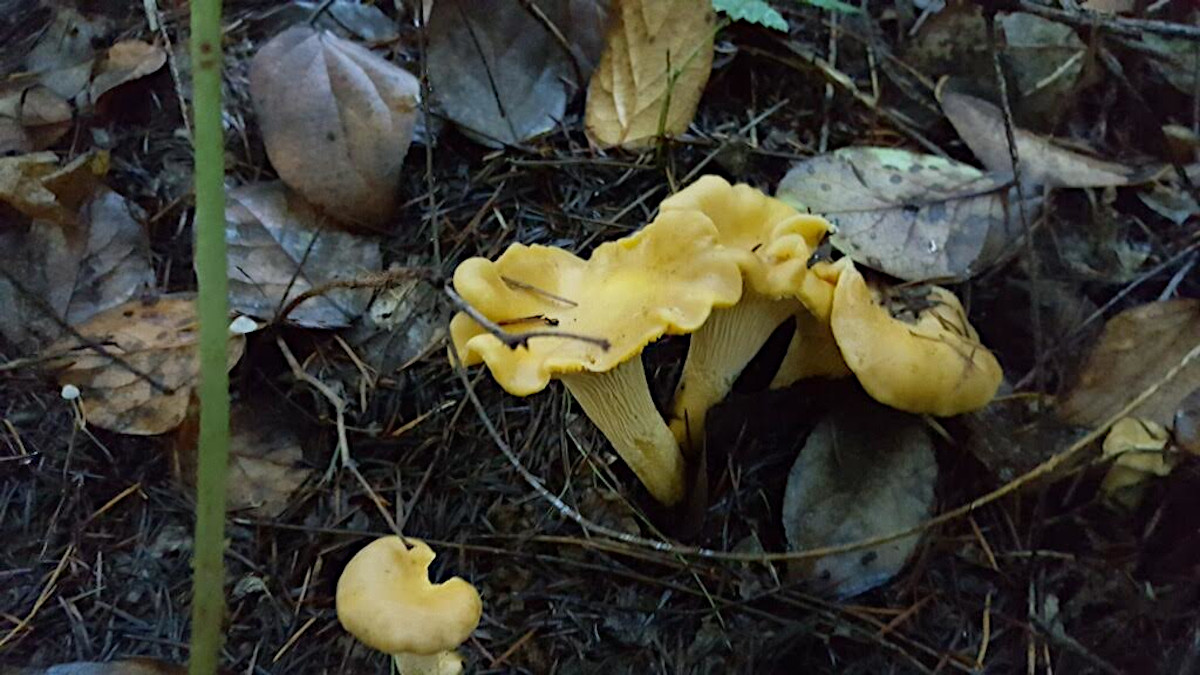
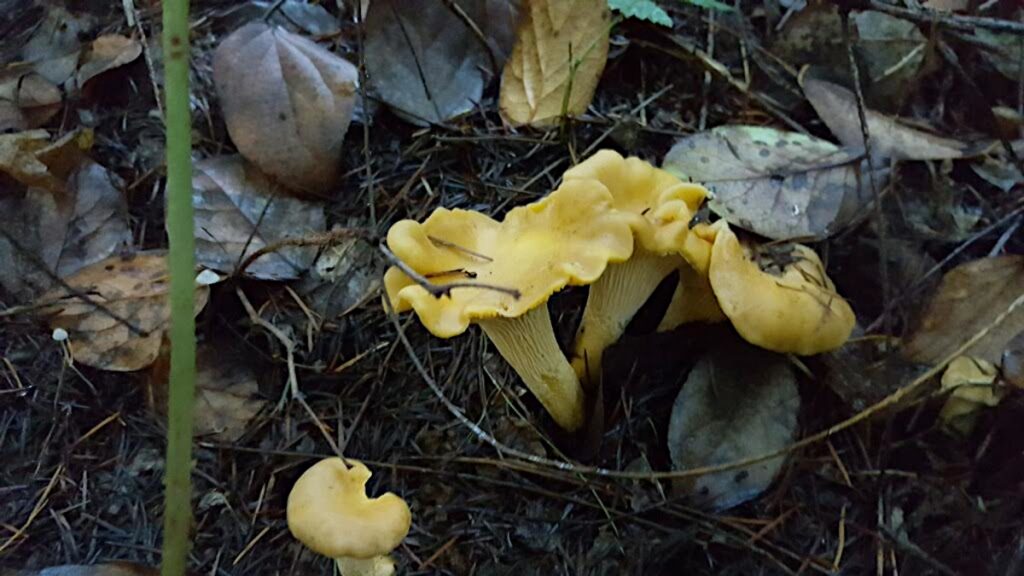
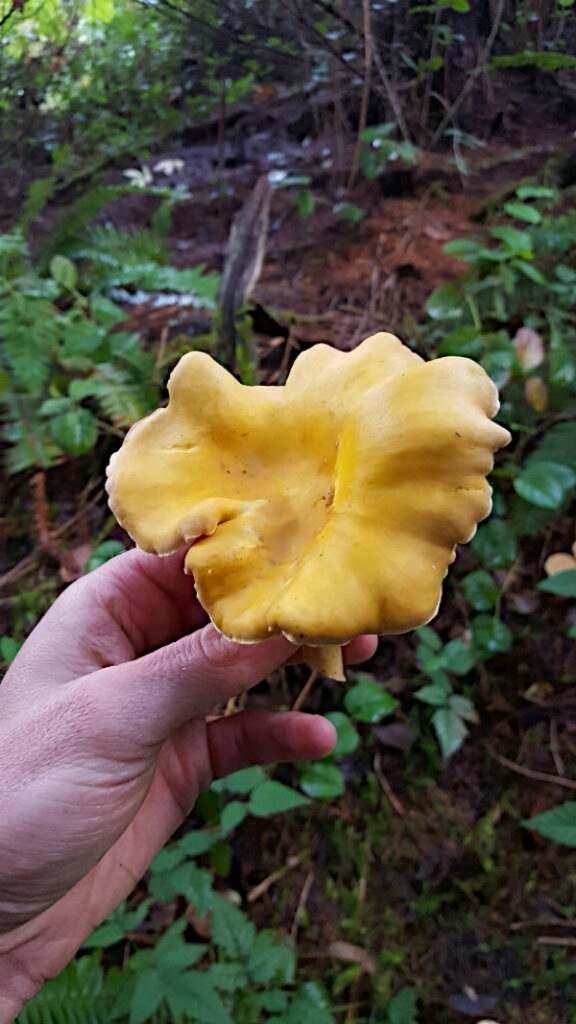
The chanterelle that we harvest in our area is the golden chanterelle. With their yellow-orange color, they are like bright jewels growing on the forest floor. They are trumpet shaped and have a fruity aroma. The stems are smooth and the gills run down the stem. Chanterelles love moisture, shade, and lots of organic matter. We usually start harvesting them shortly after the first rains in our area. The rain and the late summer/early fall warmth are what makes them pop out. The chanterelles are harvested using a sharp knife to cut the mushrooms. Cutting keeps the dirt out of the harvest container and since chanterelles are mycorrhizal in nature and fruit from their base, cutting them rather than yanking them out allows the smaller mushrooms to continue to grow.
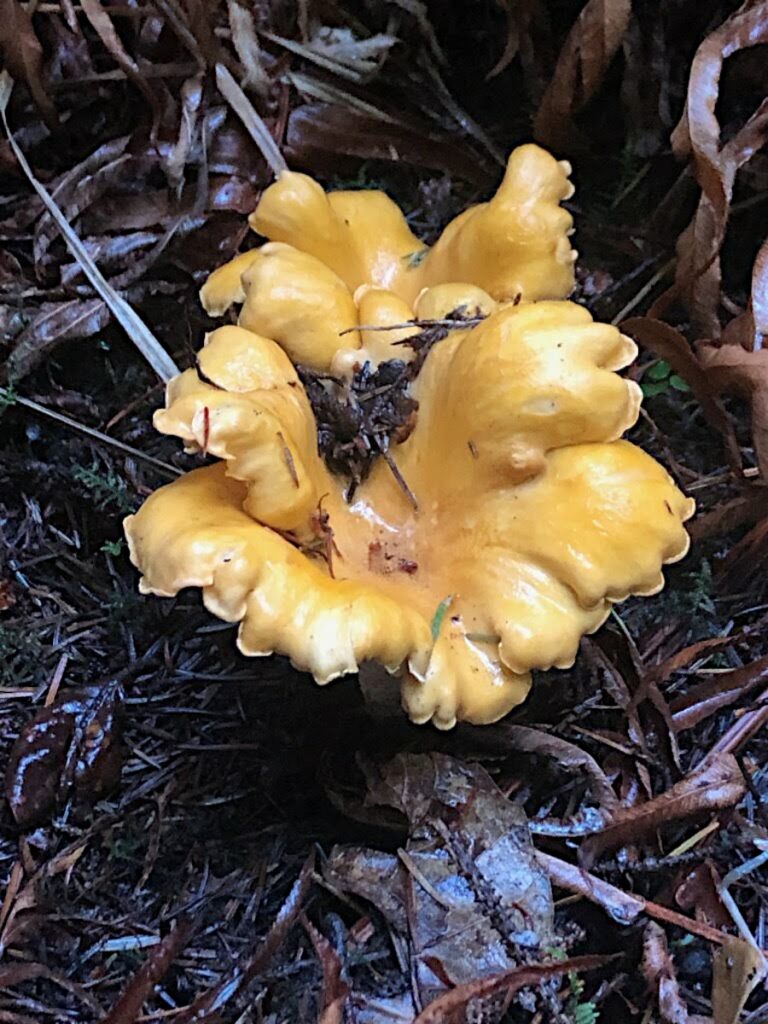
If you go hunting for chanterelles, make sure you can properly identify them. There are a couple of lookalikes that, although they may not kill you, can make you sick. However, with their distinct characteristics, golden chanterelles are one of the easiest mushrooms to identify. That being said, If you are new to mushroom hunting I still feel it is best to go out and pick chanterelles with someone knowledgeable to confirm identification of the species before going out on your own. Disclaimer: Every year people are poisoned by eating wild mushrooms, be aware that you are responsible for proper identification. Do not rely solely on my description to identify chanterelles.
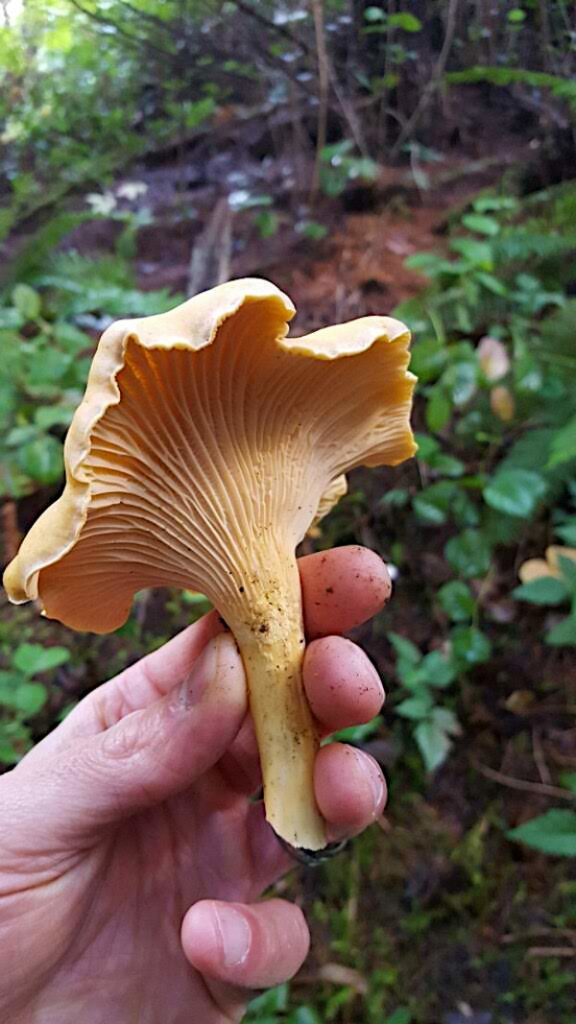
When hunting any mushrooms please respect nature and only harvest what you will eat, making sure to leave some so they can reproduce. Also harvest in a basket or some other container with openings in the bottom. This will allow the spores to drop as you travel through the woods looking for more mushrooms. I even clean my mushrooms over newspaper when I get home, then carefully fold up the newspaper and carry it out to the woods behind my house and dump the contents on the ground. Although chanterelles cannot be farmed, I have had a few pop up in the area where I have dumped the cleanings from previous harvests. This may just be a coincidence though, as the conditions in the woods behind my house are perfect for chanterelles to grow there naturally anyway.
When harvesting wild mushrooms, please also respect other property owners. It is very rude and disrespectful to harvest someone else’s mushrooms without permission. If harvesting for personal use on National Forest land there is no permit needed. However, the limit is one gallon per day, and the cap of the chanterelles harvested must have a diameter of one inch or larger. If you are harvesting to sell the mushrooms you must carry a permit that can be obtained at your local Forest Service office.
If you plan on going mushroom hunting for your own use, you might think about getting a permit to sell commercially. Just about every small coastal town I have been in during “mushroom season” has had a mushroom buyer in clear view of major traffic with high-visibility signs. Some years the price per pound is definitely worth the price of the permit. The price of the permit is dependent on how many days you would like to harvest and has a limit to the amount that can be harvested per permit. Don’t bother going out picking and trying to sell without a permit though — no reputable mushroom buyer will buy from you without recording the permit number. You can find more information about forest product permits at your local Forest Service office or here.
If you’re interested in harvesting mushrooms to sell and have never done it before, stop by a buying station to see what species they are buying and to learn the process. You are likely to run into other mushroom pickers at the buying station. Some of them are friendly and will answer your questions, others, not so much. Even if you find a friendly soul who is ready to answer your questions, don’t bother asking where they have been out picking. Some species of mushrooms will produce at the same spot every year, and anyone who has found a nice patch will want to keep it a closely-guarded secret.
After a chanterelle harvest, the mushrooms must be cleaned. I usually do this by spreading out some newspaper on the counter to catch the mess. Using a clean paintbrush I brush the dirt and debris off the mushrooms. If a person is careful when harvesting there shouldn’t be a whole lot of dirt and debris in the basket. However, shortly after a rain, and depending on the habitat where they are found, they can require a little rinsing under a low flow of water, especially the larger ones that have developed folds in their caps. If the chanterelles have to be cleaned under water I try to use them right away as they will deteriorate faster than the ones that are just dry brushed. If there are too many to use right away, I lay them out on newspaper with a fan blowing on them to dry them faster.
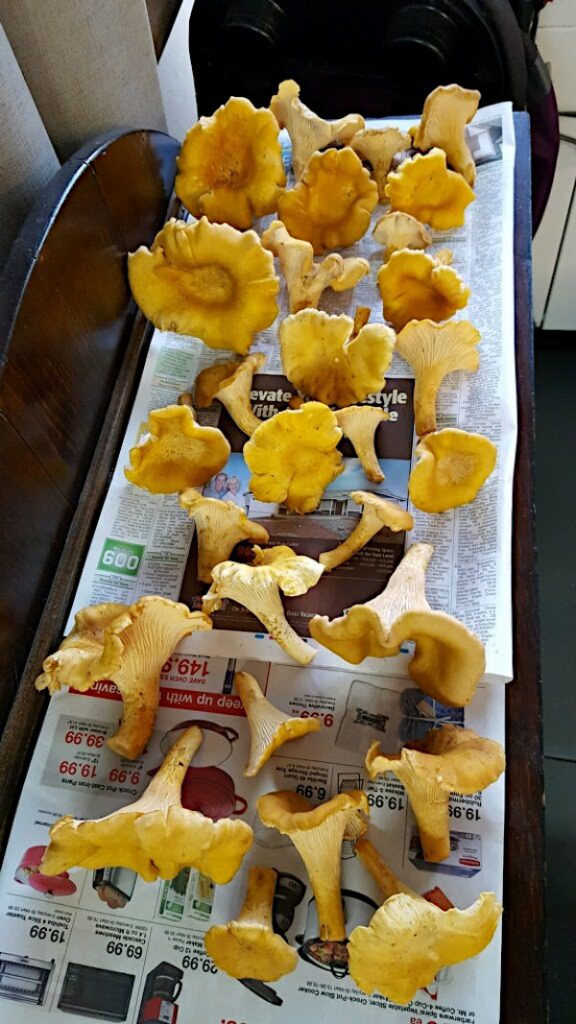
Dry chanterelles will last in the refrigerator for a few days if they are placed in a paper bag or a towel-lined bowl with a towel placed over them. If I get more than I can use in a few days I will dry them in the dehydrator. Dried chanterelles lose some flavor and the texture becomes rubbery when reconstituted. So I usually reserve my dried chanterelles to add to stews and sauces that will have other ingredients as well. Basically I am using them for the added nutrition in the dish, not necessarily the flavor. Dried chanterelles can also be powdered and used as an additive in a lot of dishes.
Another way to preserve chanterelles is to saute them in butter and then freeze them. I have heard that they can also be canned, although I have never canned them.
We love chanterelles and if you live where they grow we encourage you to try them too! If you do not live where they grow you might be able to find them in your local grocery store during the time of year when they are in season elsewhere.

Comments
Harvesting Chanterelles — No Comments
HTML tags allowed in your comment: <a href="" title=""> <abbr title=""> <acronym title=""> <b> <blockquote cite=""> <cite> <code> <del datetime=""> <em> <i> <q cite=""> <s> <strike> <strong>