
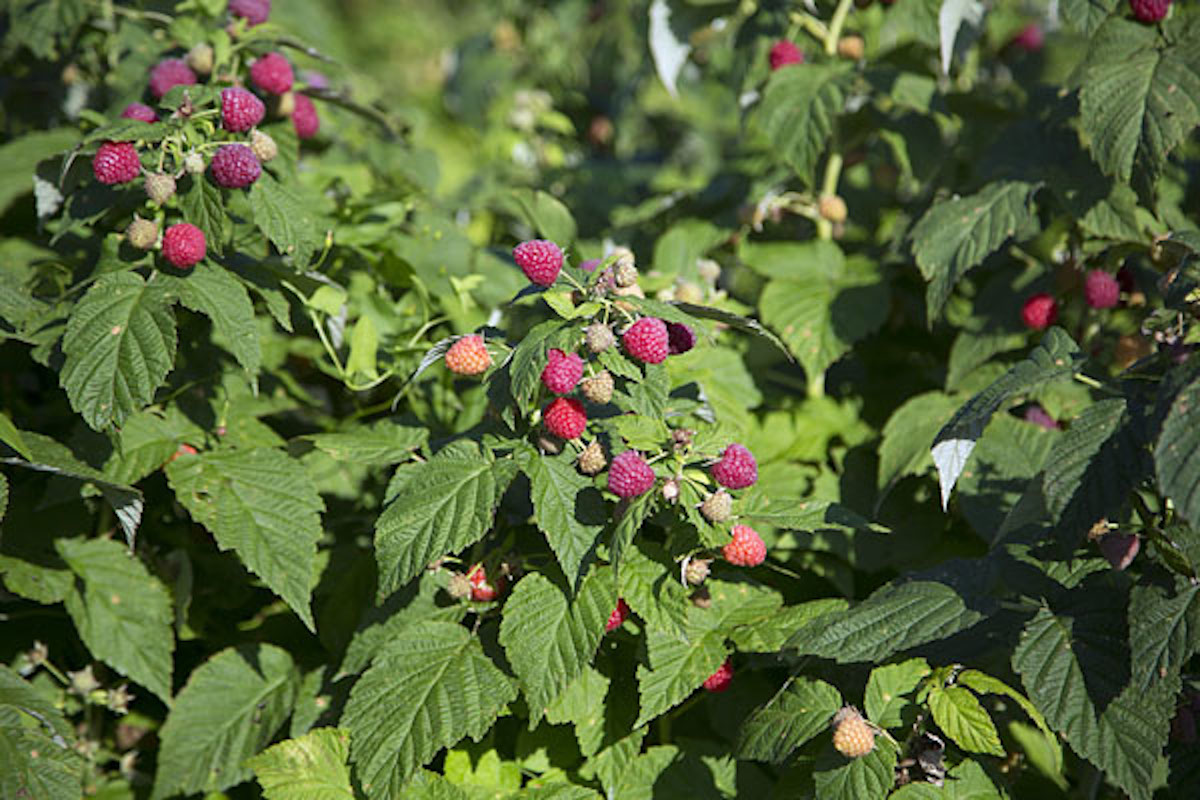
Growing raspberries
Snacking on tasty raspberries all summer and into the fall doesn’t require a lot of plants. If you get a couple of summer-fruiting raspberries and a couple of ever-bearing raspberries you can enjoy their delightful taste all season long! Summer-fruiting raspberries bear one crop per season usually in June and July. Ever-bearing raspberries (also called fall-bearing) produce berries a little later in the summer and continue producing into the fall.
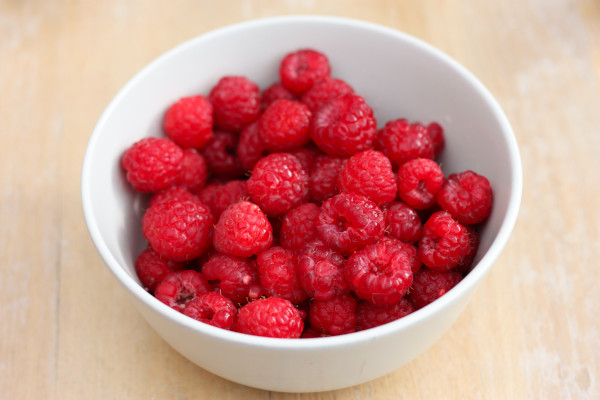
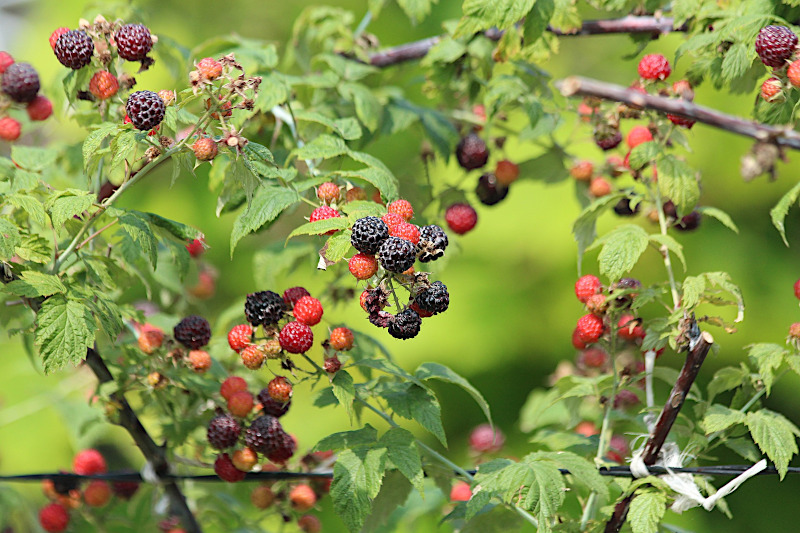
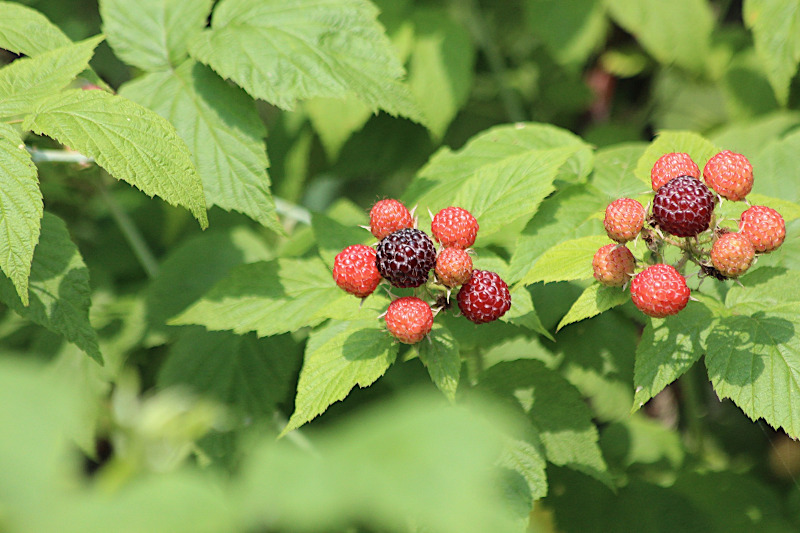
Like currants, raspberries can also be grown in shadier locations, but they will produce more and sweeter fruit with full sun. And also like currants they come in many colors, from the plump red ones that you usually seen in the market, to dark black ones that also grow wild in our area (we call them black caps). There are purple raspberries that have been bred from red and black raspberries, and golden-yellow ones. Golden raspberries are sweeter and milder in flavor than the red ones and colors range from pale yellow to orange-gold, sometimes with a tinge of pink.
Raspberries like rich well-drained soil (pH about 5.5 to 6.5) and consistent water throughout the growing season. They should be planted about 18 inches apart with about four feet between rows if you are planting a lot of them. Mix in a good amount of compost and plant the raspberries so that the crown of the plant is about an inch above the soil. It’s a good idea to mulch around the plants as pulling weeds from between raspberry canes is not fun at all.
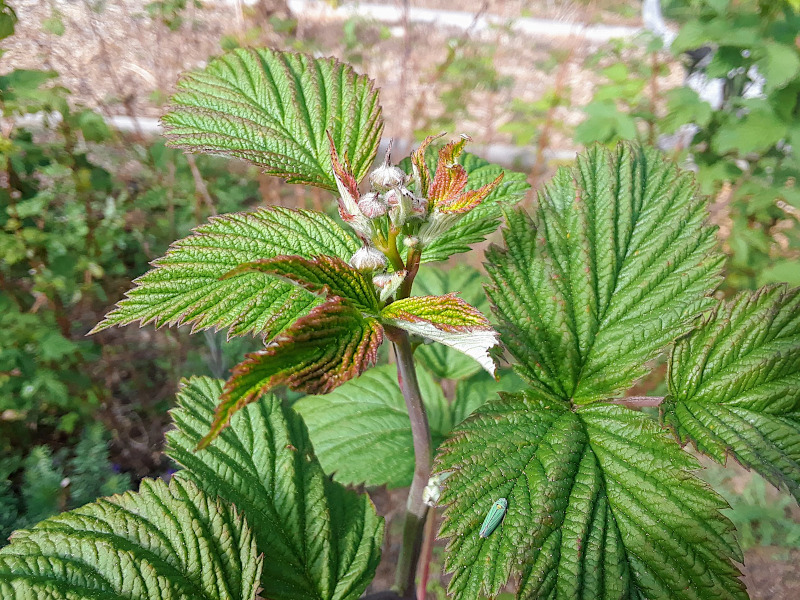
Some varieties of raspberries can get really tall and will need a support structure. A simple support can be created by sinking a post on either end of the row, adding a cross piece to the top, and placing wire from post to post. Raspberries can also be grown along a fence.
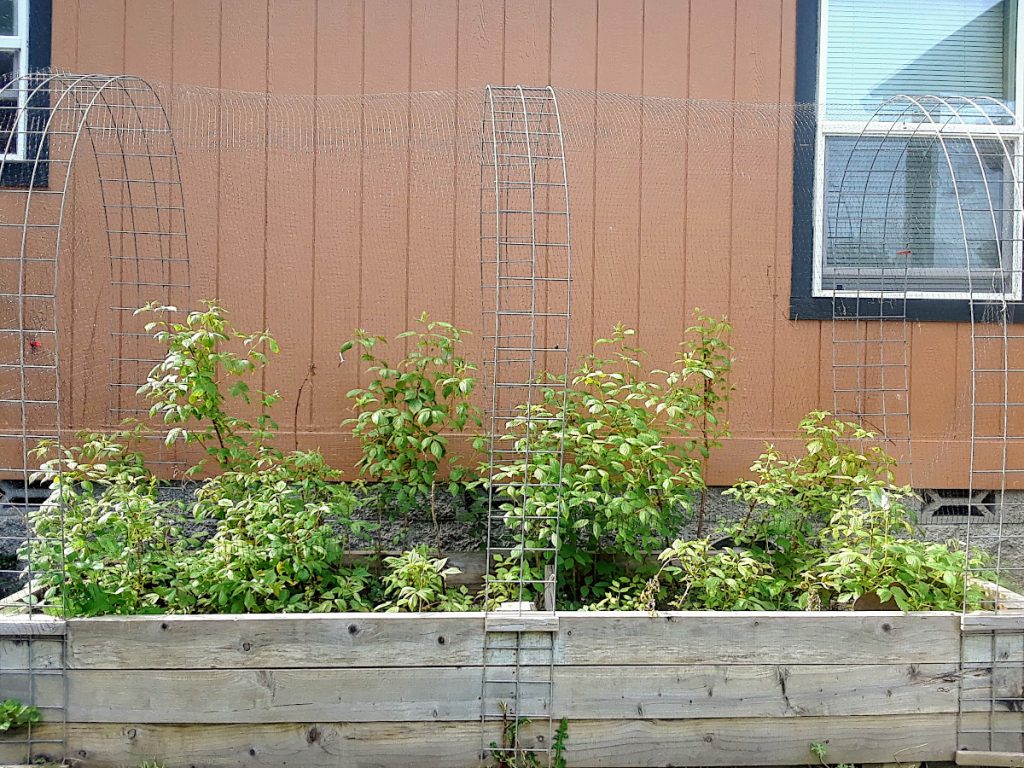
Raspberries do need to be pruned every year. There are two ways to prune raspberries — the easiest being to simply cut all of the canes to the ground before growth begins in the spring. The other method is to only cut canes that have produced the previous season to the ground and cut back the remaining canes about 25 percent.
The raspberries are ripe and ready to eat when they are fully colored and pull from the cane easily. If you have to pull with force to harvest them then they are not quite ripe. If you are not going to be eating them out in the garden (the best way), harvest them early in the morning after the dew has dried and place them in your refrigerator until ready to use. For longer storage freeze them in a single layer on a cookie sheet. Once frozen, place them in freezer bags until ready to use. For a tasty treat I like to mix frozen raspberries in with my yogurt or add them to a fruit smoothie.

Comments
Growing raspberries — No Comments
HTML tags allowed in your comment: <a href="" title=""> <abbr title=""> <acronym title=""> <b> <blockquote cite=""> <cite> <code> <del datetime=""> <em> <i> <q cite=""> <s> <strike> <strong>