
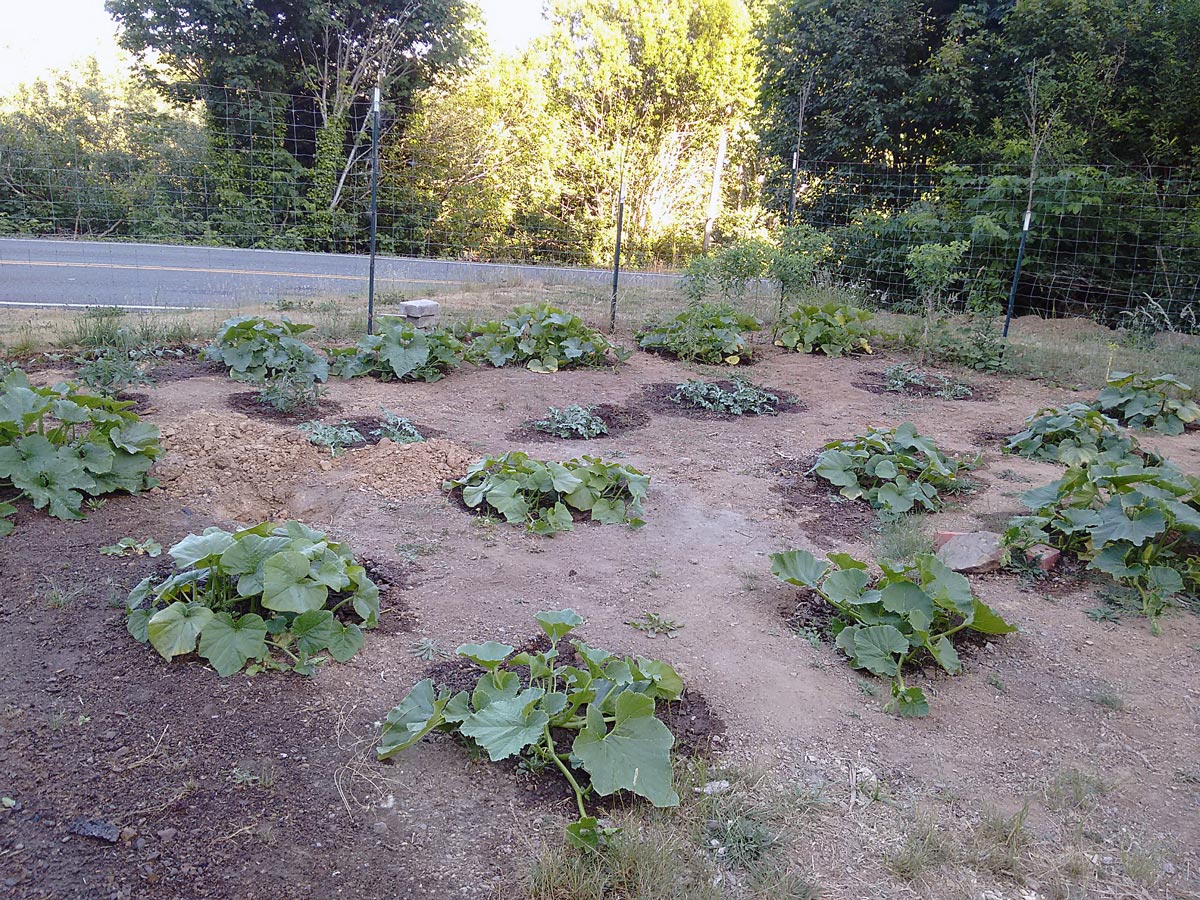
Gardening in clay soil
Gary and I have a small piece of property — one single, perfectly rectangular acre. However, although the price was great and the location was good when we purchased the property, there were not many flat spots other than where the house sat.
Since I like to garden (growing fresh organic vegetables is a must) as soon as we bought the property we started flattening out parts of the property and getting creative with how we gardened. We built terraced gardens and raised beds and also tucked small garden beds into odd nooks and crannies of the property. We moved soil from some parts of the property to others to create more level areas.
On one end of our property was a quarter-acre sized hole. It was a drainage area that only saw drainage during the rainy season, so we put in some culverts for the water to travel through and got on the list for fill dirt from the county road department. They brought us red clay soil that settled to the hardness of a brick — and they piled it high, much higher than we thought they would.
After a few of years of creating raised beds and other miscellaneous garden spots in different areas of the property we finally tackled the mountain of red clay. We hired a friend with heavy equipment to flatten the top of the mountain. After that was done, we marked off the area where we wanted the garden and installed a T-post and welded-wire fence to keep the deer out. (We are forever fighting the deer for our food.)
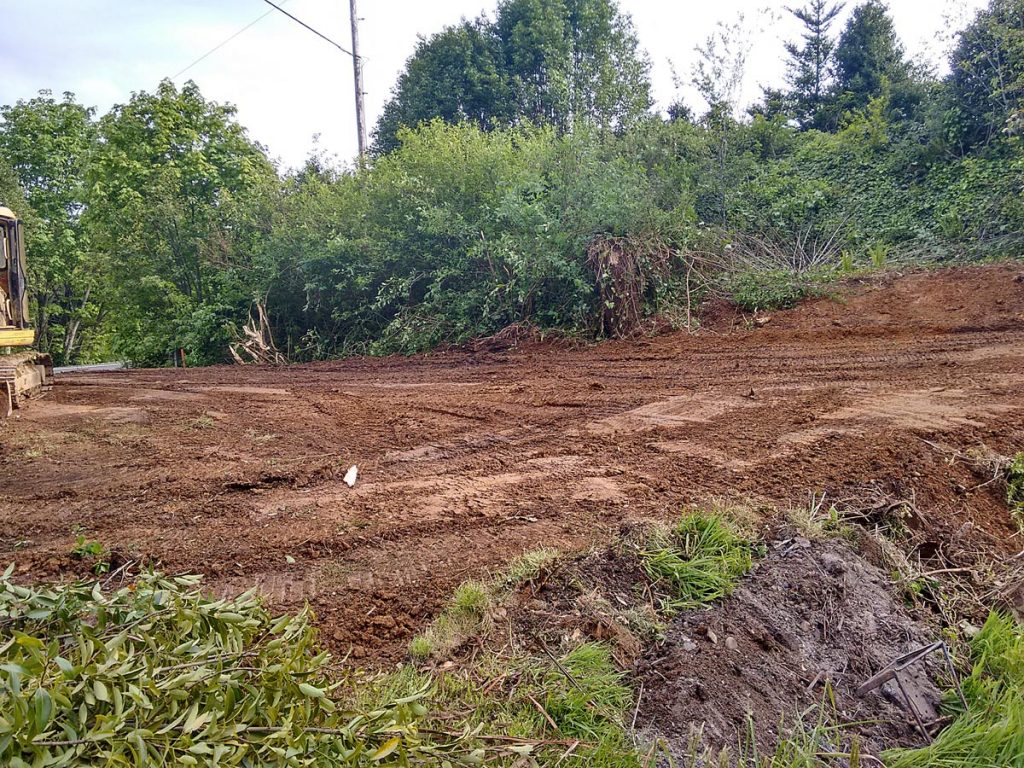
We don’t have a heavy-duty rototiller since most of our garden spaces are rather small and scattered throughout the property. Turning the small beds by hand or with our Mantis tiller is easy, but it was going to be impossible to turn the hard red soil by hand or with the Mantis. Our solution was to dig holes three feet wide and three feet deep. The dirt from these holes was moved to another part of the property that needed to be leveled. The holes were then filled with compost, good soil, and lots of manure with a little lime thrown in.
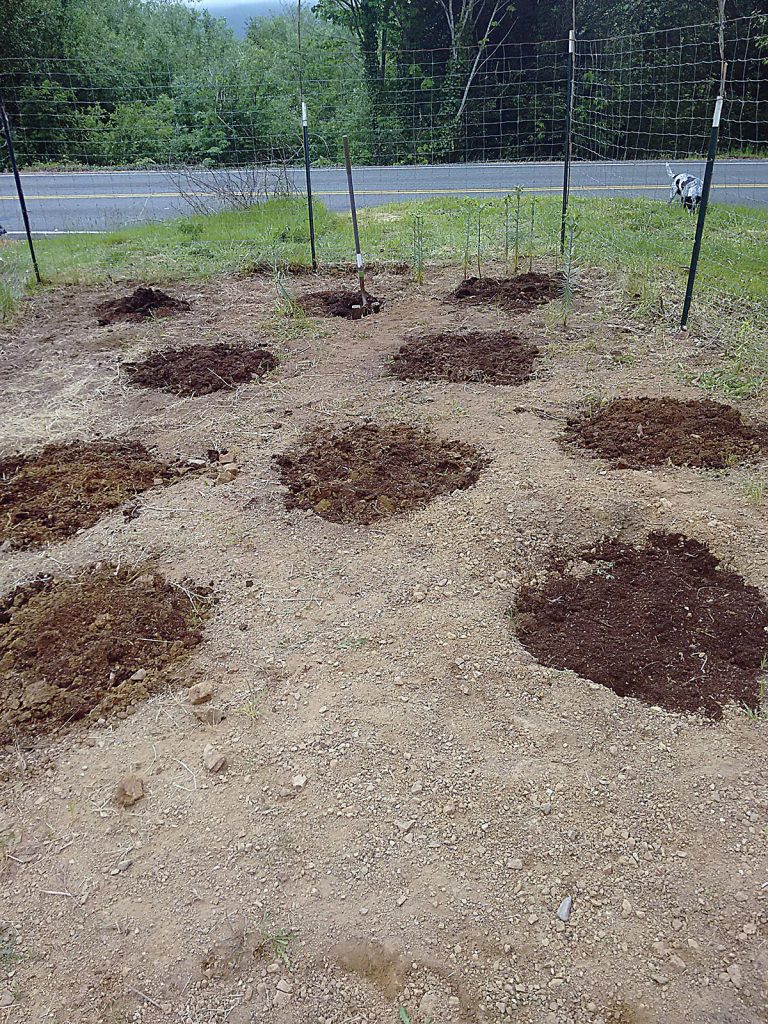
To help conserve water, pieces of a rotten log out of the woods behind the house were thrown into the bottom of each hole before it was filled with good soil. The rotten wood absorbs and holds water, and as it breaks down, it provides nutrients for the plants.
Every year we enlarge the holes just a little bit more, adding in more compost and manure as we do so. Eventually the whole garden will be nice fluffy black soil.
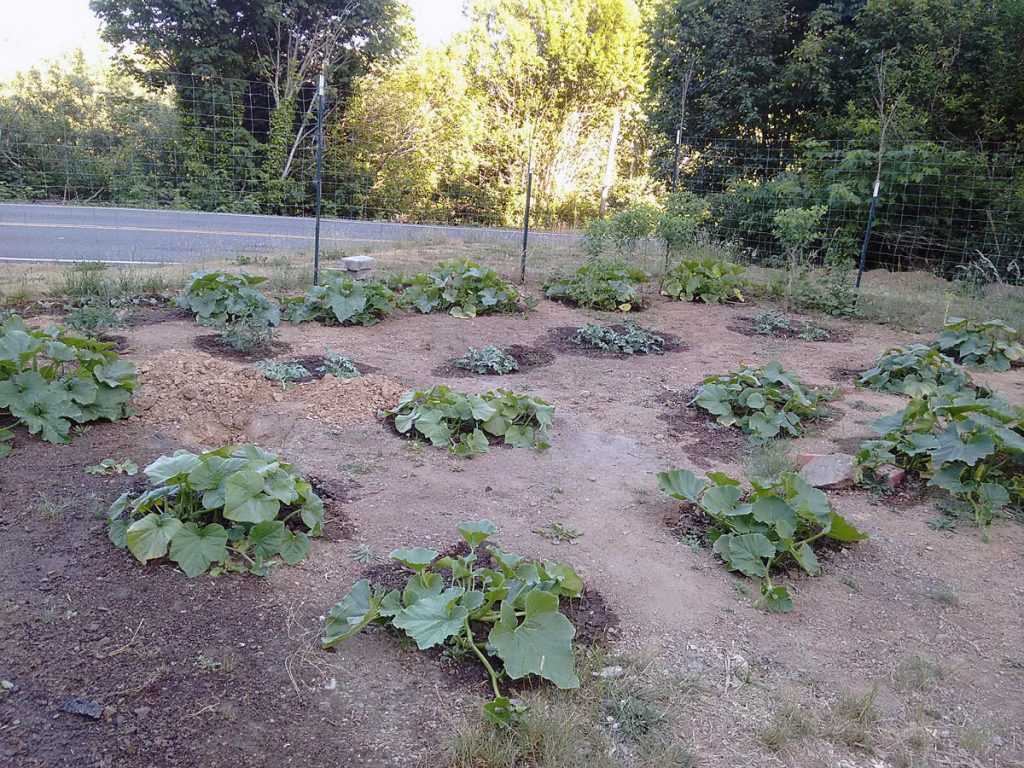
We have been able to grow a lot more vegetables with this additional garden space. We didn’t have the room to grow the Winter Luxury pumpkins and Hopi Pale Grey squash that we love — but take up a lot of room — and now we do.

Comments
Gardening in clay soil — No Comments
HTML tags allowed in your comment: <a href="" title=""> <abbr title=""> <acronym title=""> <b> <blockquote cite=""> <cite> <code> <del datetime=""> <em> <i> <q cite=""> <s> <strike> <strong>